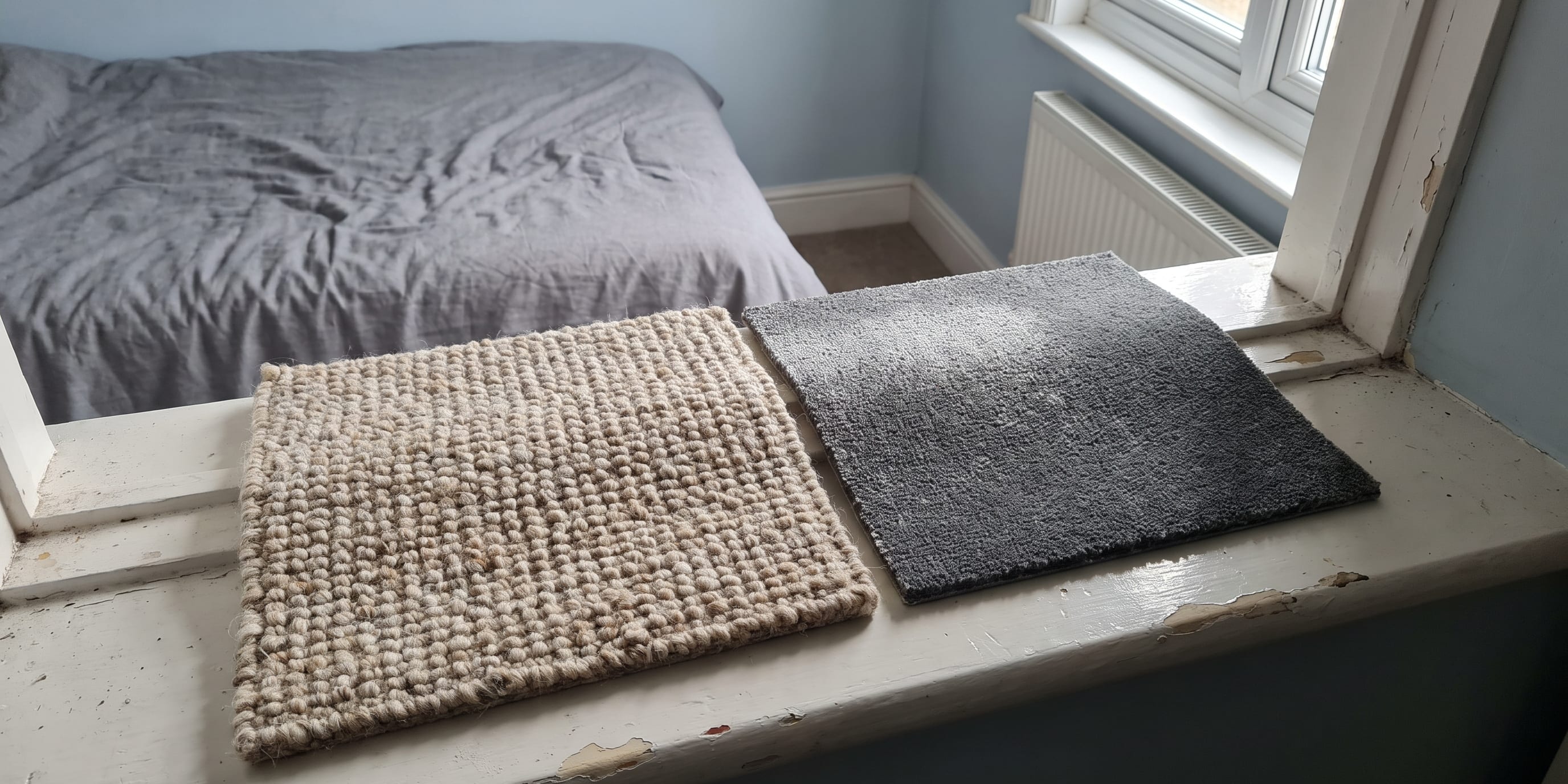
What Goes Wrong With Cheap Carpet (and How to Avoid It)
Most people who regret a carpet purchase did not buy something obviously terrible. They bought something that looked fine in the shop, felt soft underfoot, and cost noticeably less than the alternative. The problems arrived later, in ways that were hard to predict at the point of sale: a dull track worn down the landing, a seam that suddenly announced itself across the living room floor, a bay window area two shades lighter than the rest of the room.
Understanding what goes wrong with cheap carpet is more useful than simply being told to spend more. Budget carpet fails in a handful of specific, recognisable ways, and each of those failures has a cause you can check before you buy. Just as importantly, two of the biggest factors in how long a carpet lasts are not the carpet at all. They are the underlay underneath it and the quality of the fitting.
"Cheap" is three separate decisions, not one
When someone says a carpet was cheap, they usually mean the price per square metre of the roll. But the cost of a finished floor is made up of the carpet, the underlay and the fitting, and those three things fail independently.
A well chosen mid-range carpet laid on a thin foam underlay by someone who did not stretch it properly will look worse after two years than a modest carpet laid on good underlay by a careful fitter. That is the practical lesson buried in most carpet complaints. Spending wisely means knowing which of the three to protect when the budget is tight, not simply reaching for the next price band up.
Pile flattening and matting: the first thing you will notice
This is the most common complaint, and it is almost always about traffic rather than age. Carpet pile works because the fibres stand up and spring back. Every footstep bends them. In a durable carpet, the fibre has enough density, twist and resilience to recover. In a light-duty carpet, the twist opens up, the fibres lie over and stay there, and the pile mats together.
It shows first in exactly the places you would guess. The doorway of every room. The half metre in front of the sofa. The nose of each stair, which takes concentrated pressure on a narrow strip. The pivot point at the bottom of the staircase where everyone turns. On an open plan landing, you can often trace the household’s daily route across the carpet like a footpath across a field.
Flattened pile is not damage in the sense of a hole. It is a change in how light reflects off the fibres, which is why it reads as a dull, darker or shinier track. Vacuuming will not restore it once the twist has opened permanently.
What helps: a denser pile with a tighter twist, a carpet graded for the traffic level of that room rather than the average of the house, and underlay that absorbs impact instead of letting it hammer the backing.
Seams that appear months after fitting
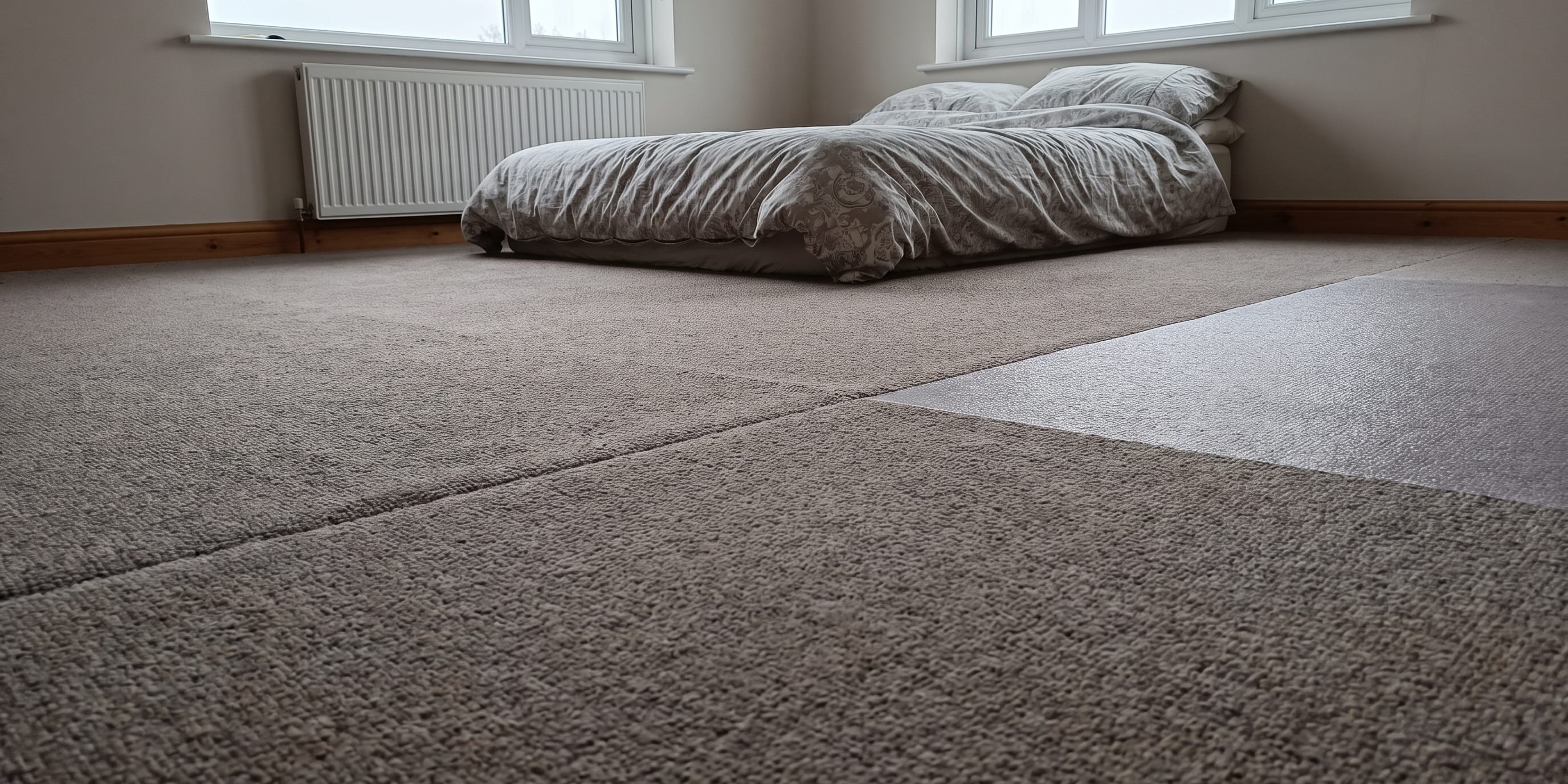
A seam in a new carpet should be almost invisible. Over time, on lower-grade carpet, it can become a visible line, a raised ridge, or a slightly open joint that collects dirt and becomes darker than the surrounding floor.
There are two causes, and they compound each other. The first is the carpet itself. A carpet with a sparse pile, a stiff backing or an inconsistent construction gives the fitter less to work with, because there is simply less pile to close over the join. The second is fitting technique. Seams need to be cut cleanly, joined with the right tape and heat, positioned away from the main traffic route and daylight where possible, and then held under proper tension. A seam that is not under even tension will peak or open as the carpet relaxes.
If a room is wide enough to need a seam, ask before you order where the seam will fall and why. A good fitter will already have a view on it.
Fading, shading and the trouble with dye quality
Two different things get called fading. One is genuine colour loss from ultraviolet light, which shows as a lightened band near patio doors, bay windows and any south facing room. Cheaper dye and cheaper fibre resist it less well, and solid mid tones often show the change more obviously than flecked or heather effects.
The other is shading, sometimes called pooling or watermarking, where areas of pile lie in different directions and appear lighter or darker depending on where you stand. Shading is not a fault in the colour at all, it is the pile lying over, and it is more likely on plush and velvet-style cut piles than on a tight twist.
You cannot stop daylight, but you can choose a fibre and a colour that cope with it, use blinds or curtains in the worst affected months, and rotate furniture so one strip is not permanently exposed. If a room has a lot of glass, mention it before you choose the carpet rather than after.
Static shocks and lingering smells
Static is a familiar complaint in homes with synthetic carpet, particularly in winter when the air is dry. Better synthetic carpets include an anti-static treatment or conductive fibre; very cheap ones may not, and the result is the small shock you get from a door handle or a radiator.
Odour is usually a different story. The mild smell from a brand new carpet and underlay generally clears within days with the windows open. A smell that will not go, or that comes back in damp weather, normally points to moisture. Some low-cost backings and foam underlays do not breathe, so any damp coming up through a concrete floor, or any spill that has soaked through, has nowhere to go. Laying new carpet over an old, saturated underlay is a reliable way to inherit a problem.
The fix is unglamorous: make sure the subfloor is dry, replace the underlay rather than reusing it, and deal with any damp issue before the new floor goes down.
Underlay changes the lifespan of the carpet above it
This is the point most worth taking away. Underlay is not padding for comfort alone. It absorbs the compressive force of footfall so the carpet backing and pile take less of the impact, and it keeps the carpet from grinding against the subfloor.
Thin, low-density foam compresses and then stays compressed. Once it has bottomed out, it is no longer protecting anything, and the carpet begins to wear as if it were laid on bare boards. A denser underlay of the right thickness for the carpet keeps doing its job for years. It also improves insulation and reduces sound between floors, which are useful side effects rather than the main reason to buy it.
If the budget is tight, holding the underlay standard and taking a slightly more modest carpet is usually the better trade. The same carpet can have a very different life expectancy depending entirely on what is under it.
Fitting quality prevents failures that have nothing to do with price
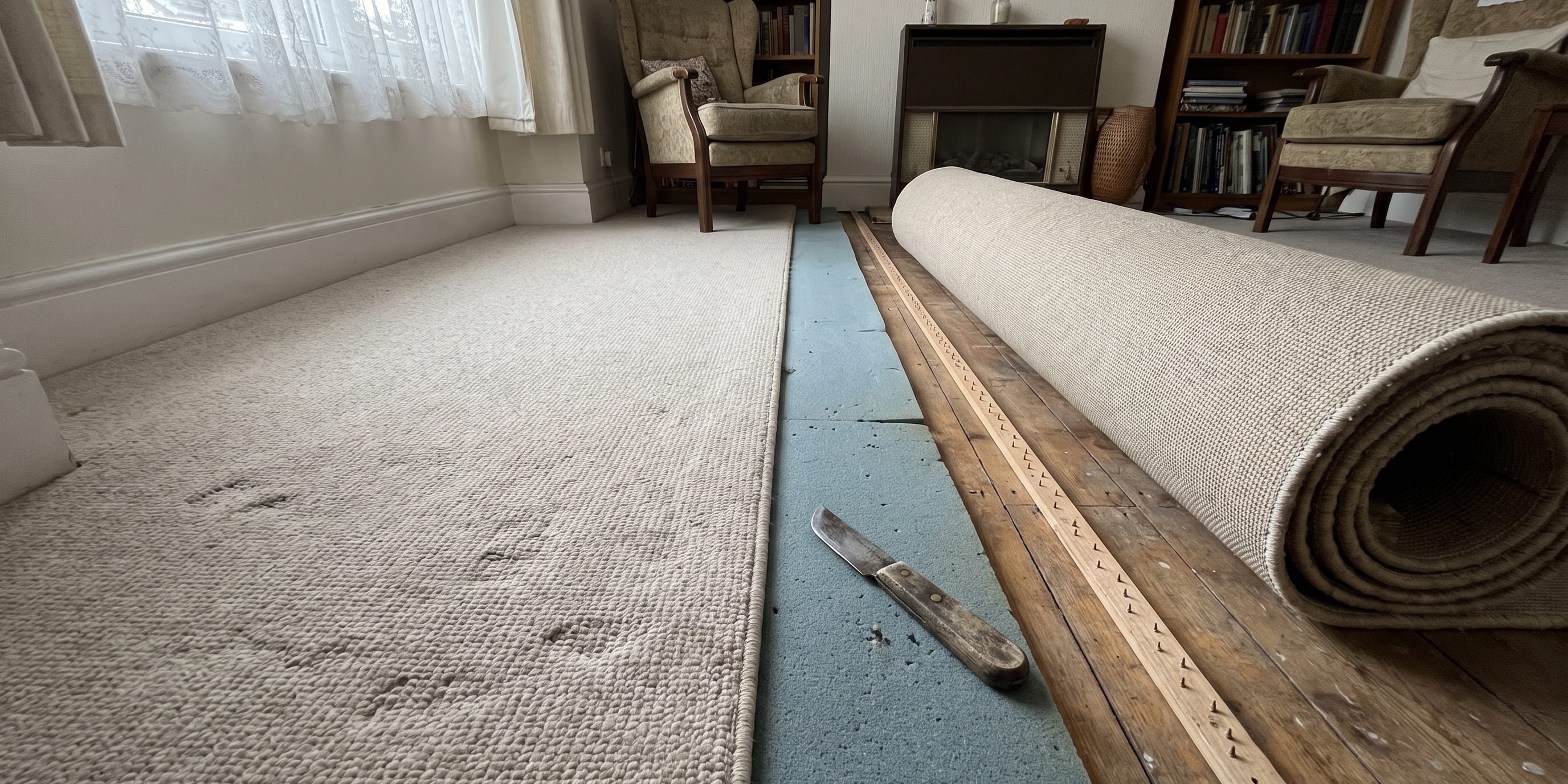
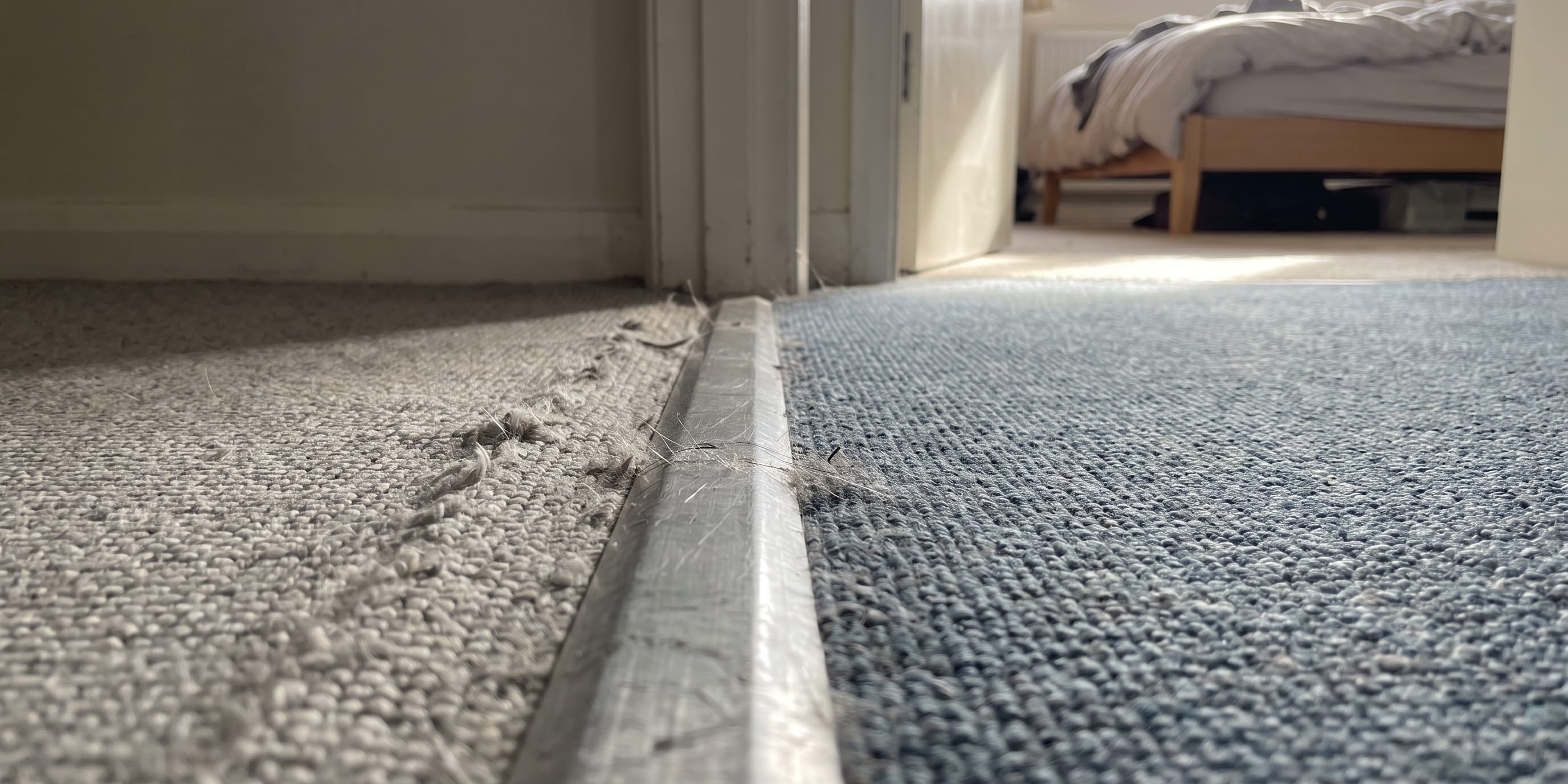
A carpet that has not been properly stretched will ruck and ripple, often within the first year, and those ripples wear along their crests. Gripper that is set at the wrong distance from the skirting, or fixed into a crumbling edge, lets the carpet pull free. Doorway bars that are the wrong profile allow the cut edge to fray. Poorly made seams open. Stairs that are not fitted tightly to the nosing wear through at the front edge far sooner than they should.
None of those are faults in the carpet. They are early failures created at fitting, and they happen to expensive carpet just as readily as to budget carpet. Conversely, careful fitting will not make a light-duty carpet heavy duty, but it will let a modest carpet reach the end of its natural life rather than failing halfway there.
A practical checklist before you buy
- What traffic grade is this carpet, and does that match the room I am putting it in rather than the house as a whole?
- What is the fibre, and how is it likely to behave in a room with a lot of daylight?
- Is this pile construction prone to shading, and will that bother me?
- What underlay is included in the quote, and what would the next step up cost?
- Is the existing underlay being replaced? (It should be, in almost all cases.)
- Where will the seams fall, and can they be kept out of the main walkway and away from the window?
- Is the subfloor dry and sound, and is anything needed to prepare it?
- Is the fitting price included, and does it cover gripper, door bars and taking away the old floor?
- How should I care for it, and does the manufacturer expect a particular type of vacuum?
When a lower-cost carpet is a sensible choice
There is nothing wrong with buying at the budget end when the situation calls for it. A spare bedroom that is used a dozen nights a year does not need a heavy-duty twist. A loft room, a study, a home office used by one person, a short-term rental between tenancies, or a room you intend to remodel within a couple of years are all sensible places to spend less on the carpet and keep the quality in the underlay and fitting.
What rarely works is putting a light-duty carpet on the stairs, in a hallway, or in the room where the whole family actually lives. Those are the places where every failure described above arrives fastest and looks worst.
The honest version of the advice is not "buy expensive carpet". It is "match the carpet to the room, never economise on underlay or fitting, and be clear about the questions above before you commit". If you would like help working out which rooms in your home justify the spend and where you can sensibly save, have a look at Boundary’s carpet range and fitting service or get in touch to talk it through before you order anything.
Questions
Frequently Asked Questions
Is cheap carpet always a false economy?
No. A lower-cost carpet in a spare bedroom, a loft room or a short-term rental can be perfectly sensible, because the failure modes that ruin budget carpet are mostly driven by foot traffic. The false economy happens when a light-duty carpet is put down a hallway or on stairs, where it will flatten and wear through long before you expected to replace it.
Why does my carpet look flat and dull in some areas but not others?
That is pile flattening, and it shows first on the routes people actually walk: doorways, the turn at the bottom of the stairs, the path between the sofa and the door. The fibres have been crushed and have lost their spring, so they reflect light differently to the upright pile around them. Denser, better twisted pile resists it for longer, and good underlay slows it down further.
Does better underlay really make a carpet last longer?
Yes, and it is one of the few upgrades that improves a carpet you have already chosen. Underlay absorbs the impact of footfall so the carpet backing and pile take less of it. A thin, low-density foam underlay compresses permanently and then stops protecting anything, which is why the same carpet can wear out at very different rates in two different houses.
Can a good fitter make a cheap carpet perform better?
Fitting will not turn a light-duty carpet into a heavy-duty one, but poor fitting will ruin a good carpet. Correct power stretching, properly made seams, sound gripper work and neat door bar detailing prevent rucking, seam peaking and edge fraying, which are early failures that have nothing to do with what the carpet cost.
Why does new carpet sometimes smell?
A faint smell from new carpet and underlay usually settles within a few days with ventilation. A smell that persists or returns is more often a sign of moisture trapped beneath a non breathable backing, or an old underlay that was left down and has absorbed years of spills.