What Carpet Does Not Show Marks? Hiding Footprints
Some carpets look freshly vacuumed for days. Others show every trip to the kitchen, every pass of the vacuum head and a pale halo where the dog likes to lie. If you have ever stood in a showroom wondering what carpet does not show marks, the honest answer is that no carpet is completely immune, but the difference between the worst and the best choice is enormous. It comes down to three things working together: how the pile is constructed, how much sheen the fibre has, and what colour and pattern the yarn is.
Most advice online stops at colour, which is the least important of the three. Get the texture and the fibre right and you can have almost any shade you like. Get them wrong and no colour will save you.
Why footprints and vacuum lines appear in the first place
Carpet pile is a forest of fibre ends standing more or less upright. When light hits those ends, it reflects back towards you in a consistent way, so the surface reads as one even colour.
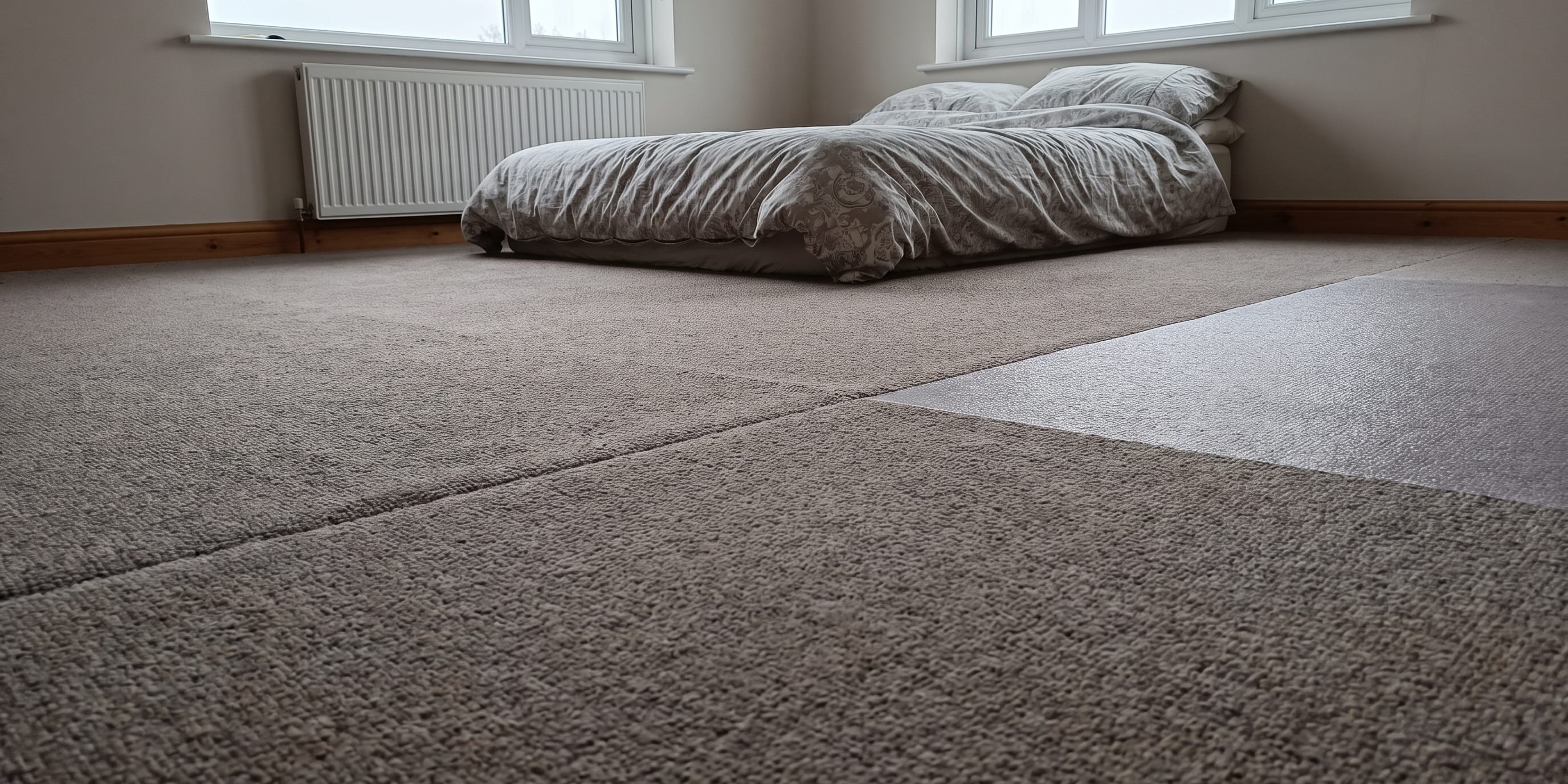
Walk across it, and your weight pushes a patch of fibres over so they lie at an angle. Those bent fibres now present their sides to the light rather than their tips. Sides reflect far more light than tips, so the flattened area looks lighter or darker than its surroundings depending on where you are standing. Move to the other side of the room and the same footprint can appear to swap from light to dark. Nothing about the colour has changed. Only the angle.
This is why a vacuum leaves stripes. The brush bar lays alternate rows of pile in opposite directions, and the two directions reflect light differently. It is the same effect you get brushing velvet the wrong way.
Two things follow from this. First, a carpet whose fibre ends are already pointing in lots of random directions has very little left to reveal when you tread on it, because there is no single tidy direction to disturb. Second, a fibre with a low sheen reflects less light either way, so the contrast between pressed and unpressed pile is weaker.
It is worth separating temporary shading from permanent pile reversal. Footprints and vacuum lines lift with vacuuming. Pile reversal, often called watermarking or pooling, is where patches of pile take on a permanent lean, producing cloudy light and dark areas with soft wavy edges. It is most associated with smooth, dense cut pile carpets, and manufacturers generally treat it as a characteristic of the construction rather than a fault. You cannot brush it out, so the only defence is choosing a construction that resists it.
Pile types ranked for mark visibility
This is the decision that matters most. Here are the main constructions, from the worst offender to the best.
Cut pile velvet and smooth saxony. The fibres are cut to a level surface and lie close together with very little twist, which is exactly what makes them feel luxurious. It also makes them a mirror. Velvets and short, dense saxonies show footprints and vacuum lines more clearly than anything else on the market, and they are the constructions most likely to develop pile reversal over time. Beautiful in a formal sitting room that nobody walks through. A poor choice for a family hallway.
Longer saxony and shaggy piles. Better than velvet, since the pile is long enough to fall in varied directions, but long fibres also crush and splay. You trade sharp footprints for general flattening along traffic routes.
Twist pile. The yarn is tightly twisted before being cut, so each fibre end curls and kinks slightly rather than standing to attention. Light scatters instead of reflecting in a sheet. Twists are the workhorse of UK homes for good reason: they resist flattening, hide tracking well and take heavy footfall. A heavy domestic twist is the safest single answer to the marking question.
Frieze and hard twist. A twist taken further, with so much twist in the yarn that the surface looks slightly curly and informal. Excellent at disguising footprints, vacuum lines and crushing. The texture is less smooth underfoot than a velvet, which some people love and some do not.
Loop pile and Berber. The yarn is left as uncut loops, so there are no cut fibre tips to lie over at all. Loop piles hide footprints very well and hold their appearance in corridors. The trade-offs are different: loops can be snagged by pet claws, and a very pale loop can show soiling along walking lines, since dirt sits on the surface rather than disappearing into a deep pile.
Cut and loop. Patterned constructions that combine cut tufts and loops to create a texture, a geometric or a subtle carved effect. Because the surface already has deliberate variation in height and light reflection, random footprints have far less to work with. These are genuinely good at hiding marks and give you pattern without a bold repeat.
Ranked simply, from best to worst at hiding marks: frieze and hard twist, then cut and loop, then loop pile, then standard twist, then long saxony, then smooth velvet.
Fibre and sheen
Two carpets of identical construction can perform quite differently depending on the yarn.
Polypropylene is naturally stain resistant and the easiest fibre to clean, which makes it popular for family homes. Sheen varies between qualities. Some polypropylene yarns have a noticeable shine that emphasises tracking, especially in a cut pile. In a tight twist with a heathered yarn, it performs well.
Nylon holds its twist better than most fibres, so a nylon twist stays looking tidy for longer and resists the crushing that makes traffic lanes visible. Look for a matt or lightly textured finish rather than a lustrous one.
Wool and wool blends have a soft natural lustre rather than a hard shine. In a smooth cut pile, that lustre can make shading more apparent. In a wool rich twist, which is how most UK wool carpet is sold, it is one of the best mark hiding combinations available, and it springs back from compression well.
Polyester and high shine synthetic yarns feel wonderfully soft, but silky fibres with a high lustre are the most likely to show every footprint. If you want that softness, choose it in a textured or twisted construction rather than a flat velvet, and accept that it will need regular grooming to look its best.
The rule of thumb is simple. Matt beats shiny. Textured beats smooth. And a yarn made from several shades twisted together beats a single flat shade.
Colour and pattern, used as a complement
Once texture and sheen are sorted, colour does the final bit of work, mostly on dirt rather than on footprints.
Very pale carpets show soil, mud and spills. Flat dark carpets show the opposite: lint, dust, pet hair and the pale fluff from a new sofa throw. Both extremes are high maintenance for different reasons.
The sweet spot is a mid-tone that is not one single colour. Heathered, flecked and multi-tone yarns contain several shades blended together, so the eye reads an average rather than noticing a mark against a uniform field. Warm greys, mushroom, taupe, biscuit and soft mid browns all work hard here, and they sit comfortably with most UK interiors.
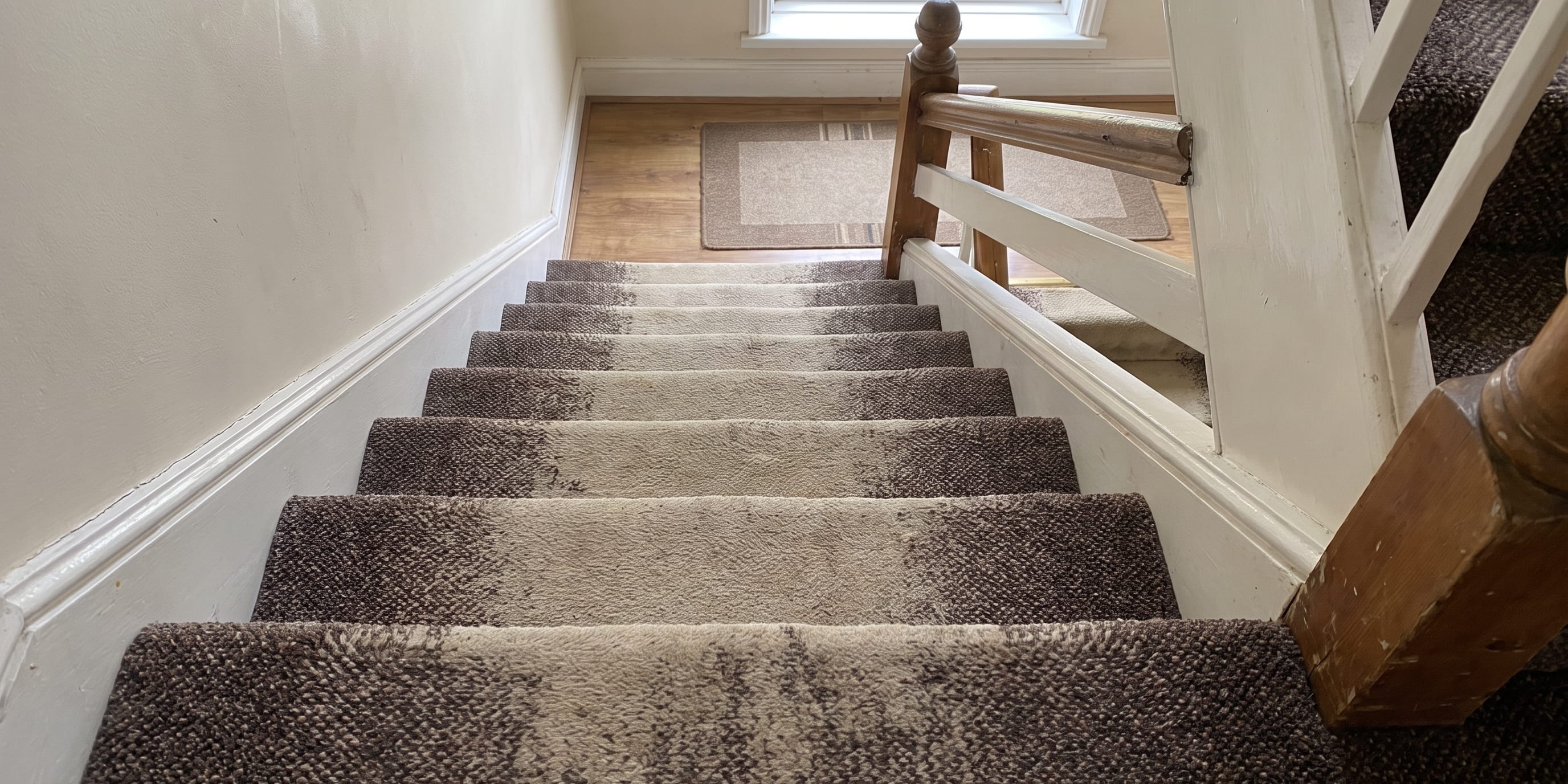
If you want to go further, a subtle pattern is the most forgiving surface there is. Small scale geometrics, tonal stripes, herringbone effects and carved textures give the eye so much to look at that footprints and the odd mark simply vanish into the design. On stairs, a patterned or textured carpet also disguises the slight shading that naturally develops on tread nosings.
Room by room
In households with children, pets or heavy footfall, the right answer changes from room to room.
Hallways and entrances. This is where grit and moisture arrive. Prioritise a hard twist or loop in a mid-tone flecked yarn, and put a decent barrier mat at the door. Dark enough to cope with mud, varied enough to hide it.
Stairs. Stairs take concentrated wear on the front edge of each tread and are seen from below at an angle, which is precisely the viewing position that exaggerates shading. A textured twist or a patterned carpet is far more forgiving here than any velvet. Check the carpet is suitable for stairs, as some very long piles and loose constructions are not recommended.
Living rooms in busy households. You want softness without the sheen. A good quality twist in polypropylene or a wool rich blend gives you comfort underfoot, easy cleaning and discreet marking. If pets have claws that catch, favour a cut pile twist over a loop. Mid-tones in a flecked yarn hide the inevitable crumbs, hair and paw prints between cleans.
Bedrooms and quieter rooms. This is where a soft saxony or velvet earns its place. Footfall is low and you get the plush feel where you most appreciate it barefoot.
See it and feel it before you commit
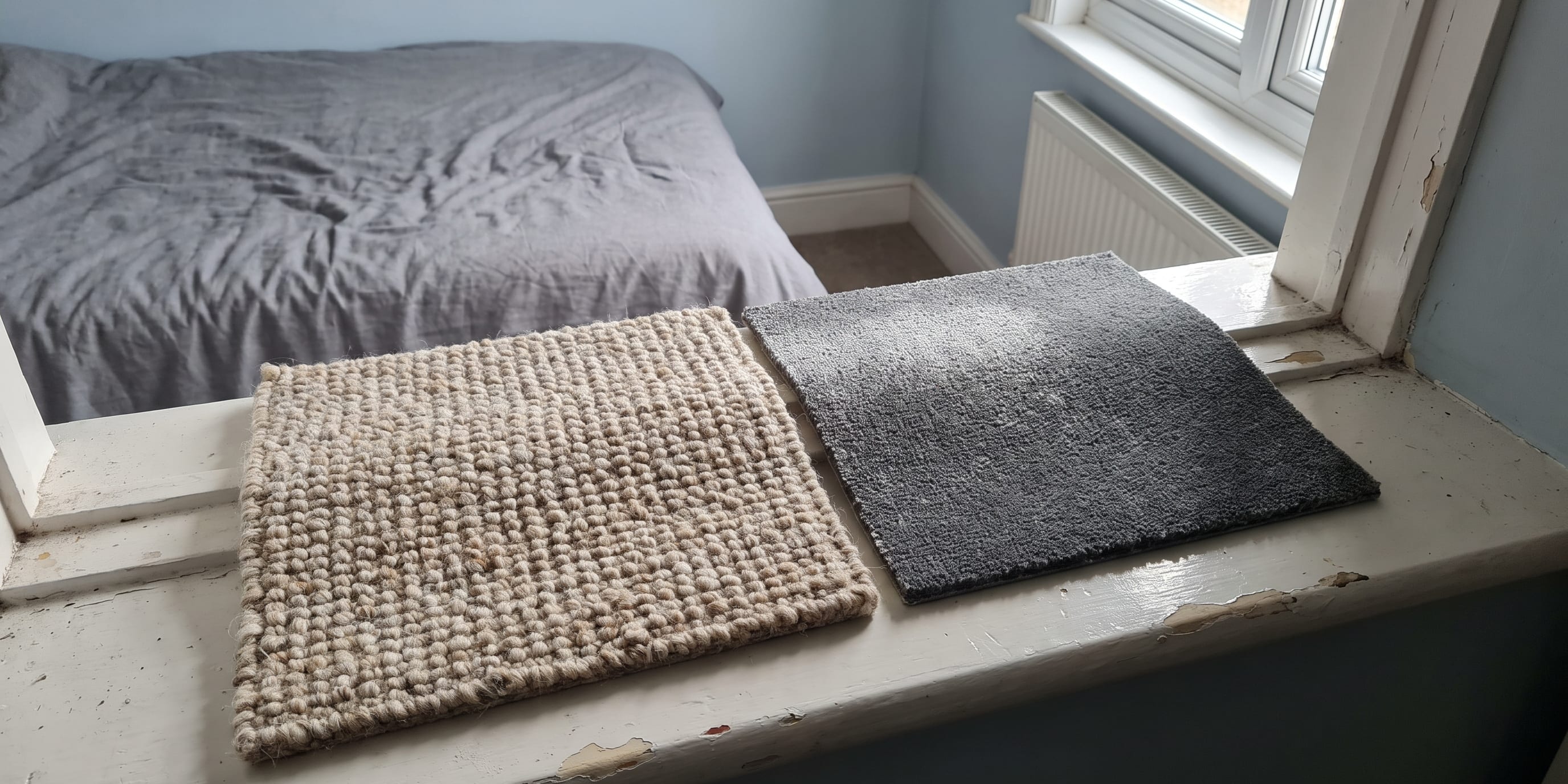
Sheen and texture are the two things photographs are worst at conveying. A yarn that looks matt on a screen can be surprisingly lustrous in daylight, and the difference between a mild twist and a hard twist is something your hand understands instantly while your eye may not. Lighting matters too: a carpet laid along a window wall shows shading far more than the same carpet in a room lit from above.
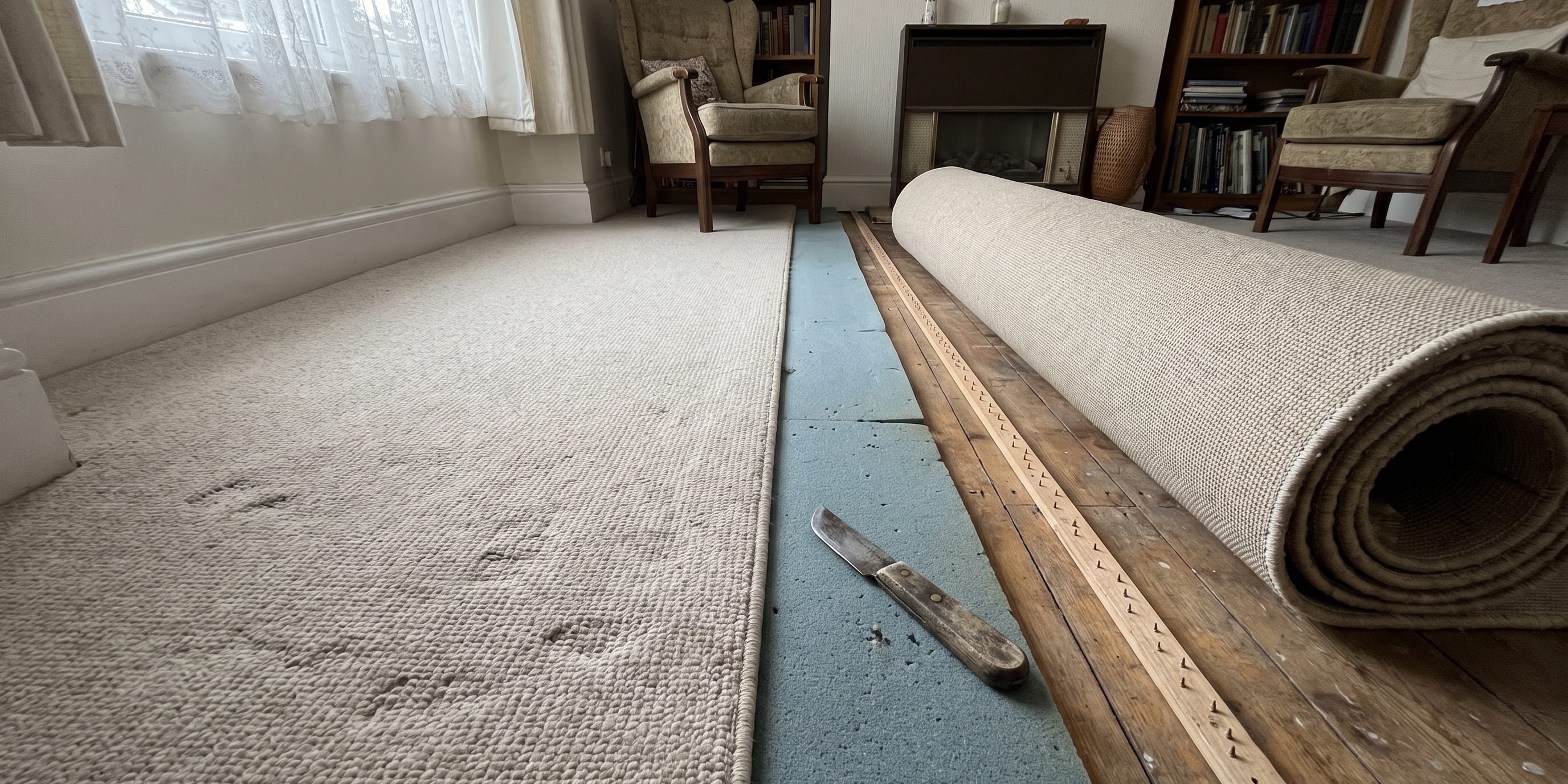
The practical approach is to narrow things down to a construction and a tone, then look at large samples in the room they are destined for, at different times of day, and run your hand across the pile against the direction it leans. If it changes colour dramatically, it will do the same under your feet. Get a proper measure done at the same time so you know what each option costs fitted, including underlay, gripper and door bars, rather than comparing square metre prices.
If you would like help matching texture, fibre and colour to how your rooms are really used, book a free measure and sample viewing with Boundary’s carpet range and fitting service and bring your shortlist along to compare side by side.
Questions
Frequently Asked Questions
What type of carpet shows the fewest footprints?
A twist pile or frieze carpet in a low sheen fibre and a mid-tone, multi-coloured yarn shows the fewest footprints. The tightly twisted fibre ends scatter light in all directions, so pressed areas look much the same as the rest of the carpet.
Do vacuum marks mean my carpet is faulty?
No. Vacuum lines and footprints are a light reflection effect caused by the pile lying in different directions. They are most noticeable on smooth cut pile and velvet carpets and are a normal characteristic of those constructions rather than a defect.
Is a light or dark carpet better for hiding dirt?
Neither extreme works well. Very pale carpets show soil and stains, while flat dark colours show lint, pet hair and dust. A mid-tone with several shades of yarn twisted together, or a subtle pattern, hides everyday marks best.
Does wool show marks more than synthetic carpet?
It depends on the construction rather than the fibre. Wool has a soft natural lustre that can make shading more obvious in a smooth cut pile, but a wool rich twist is one of the better mark hiding options. High shine synthetic yarns tend to track the most.
Can shading in a carpet be brushed out?
Light footprints and vacuum lines usually lift with vacuuming in alternating directions. Permanent pile reversal, sometimes called watermarking, cannot be brushed out, which is why construction and fibre choice matter more than aftercare.