What Does Carpet Tog Rating Actually Mean? A Guide
Tog is one of those words that turns up in carpet showrooms, on sample labels and in product listings without anyone ever quite explaining it. Most people recognise it from duvets, assume a bigger number means something better, and move on. That assumption is the single most common misunderstanding in carpet buying, and it leads to people paying more for warmth they do not need, or worse, fitting a floor that quietly works against their heating system.
The useful way to think about tog is not as a technical specification to memorise, but as one of several decisions you make room by room, alongside fibre, pile and underlay. Here is what the number actually describes, where it matters, where it does not, and what to raise with your fitter before anything gets ordered.
What a tog actually measures
A tog is a unit of thermal resistance. It measures how effectively a material slows the movement of heat through it. That is the whole definition. A carpet with a 1.5 tog rating resists heat transfer less than a carpet rated at 2.2 tog, and that is the only thing the comparison tells you.
It says nothing about how soft the carpet feels underfoot. Nothing about how well it will cope with a pushchair being wheeled over it twice a day. Nothing about stain resistance, colour fastness, fibre quality or how long it will look presentable. Those properties are measured in entirely different ways, and a carpet can score well on one and poorly on another.
Tog rises mainly with trapped air. Thicker piles, denser constructions and heavier backings all hold more air, and air is a poor conductor of heat, which is why those carpets insulate better. That relationship is why thickness and tog often move together, and why people conflate them. But the link is loose rather than fixed. A tightly constructed wool loop pile can feel substantial underfoot while posting a fairly modest tog figure, because the construction leaves less air trapped in the pile.
The myth that higher tog means better carpet
If you remember one thing, make it this. A high tog rating is not a quality rating.
Durability in carpet comes from fibre type, pile density, twist level and how well the pile is anchored into the backing. A dense, short pile carpet made from a hard wearing fibre blend will shrug off traffic that flattens a thick, loosely tufted saxony within a couple of years. The thick saxony may well have the higher tog. It will still be the wrong choice for a hall.
There is a related trap at the budget end of the market. A cheap carpet can be made to feel thick and warm with a bulky backing and a lofty, open pile that contains relatively little fibre. It will register a respectable tog figure. It will also crush, shade and flatten quickly, because thickness without density is just air waiting to be squashed out. When a sample feels plush, press your thumb firmly into the pile and look at how quickly it recovers, and bend the sample backwards to see how much backing shows through at the base. That tells you more about longevity than any tog number on the label.
Tog is worth knowing because comfort matters and heating bills matter. It is simply not the measurement that answers the question "will this still look good in five years".
Why the combined figure is the one that counts
A carpet is almost never fitted directly to the subfloor. There is underlay beneath it, and underlay is usually the bigger insulator of the two by a comfortable margin. Crumb rubber, PU foam and felt underlays all have their own tog values, and these are published in the same way carpet values are.
What sits between your feet and the floor structure is the total. Carpet tog plus underlay tog. That combined tog figure is what determines how warm the floor feels and how much heat is retained in the room, and it is the number to work with when you are making decisions.
This is genuinely useful, because it gives you two levers rather than one. If you have fallen for a carpet with a lower tog than you expected, a warmer underlay can lift the combined tog total. If a room is already warm, or sits above a heated space, you can pair a cosy carpet with a lower tog underlay and keep the total sensible. Thinking only about the carpet, or only about the underlay, means you are guessing at half the equation.
It is worth adding that underlay is doing several jobs at once. It cushions the carpet, absorbs impact, improves sound insulation and significantly extends the life of the covering above it. Choosing underlay purely on its tog rating ignores the firmness and recovery characteristics that actually protect your carpet. Warmth is one factor in that choice, not the whole of it.
Room by room: where warmth earns its keep
Hallways, landings and stairs
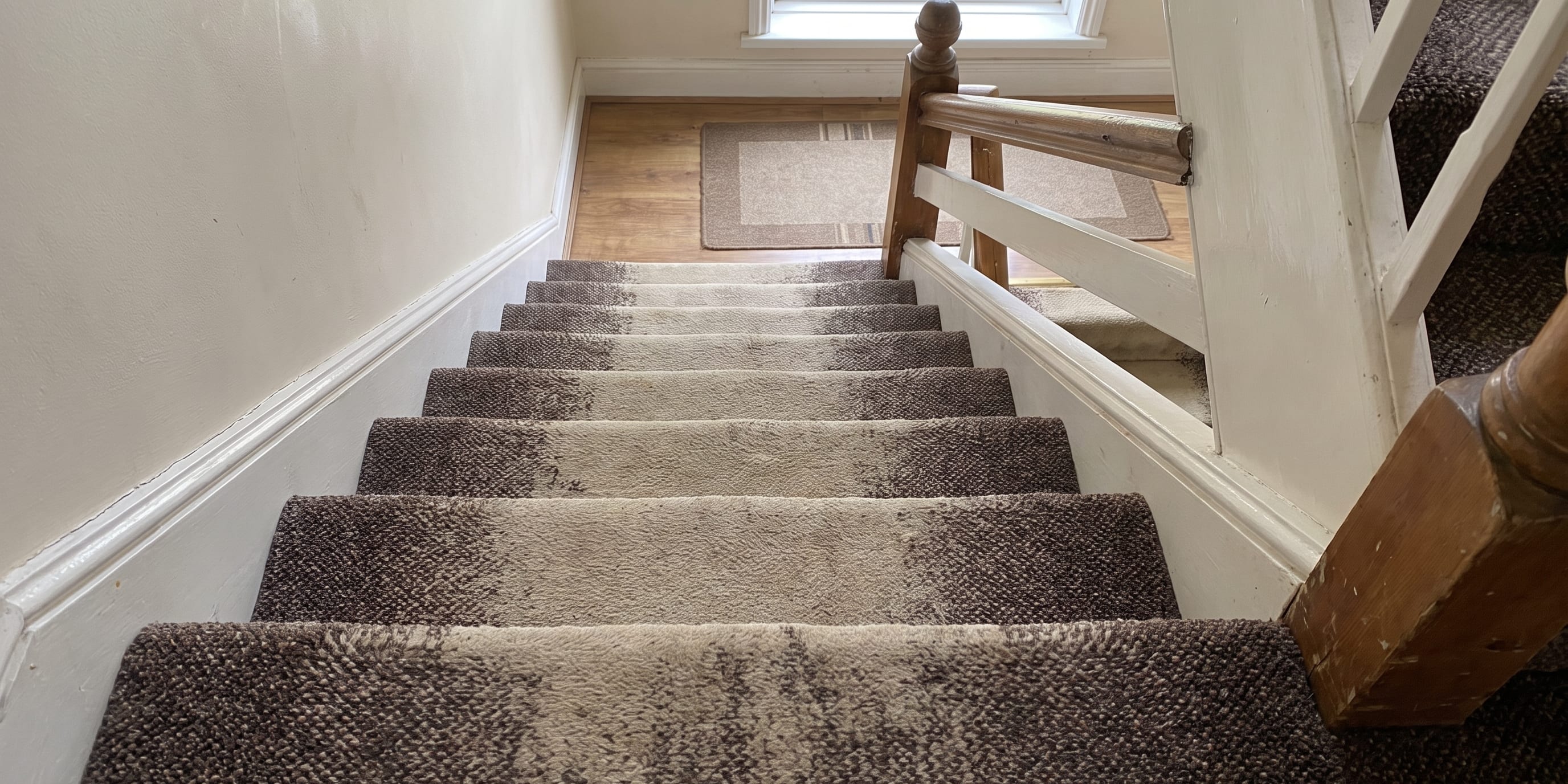
These are traffic areas first and comfort areas second. The priority is a dense, hard wearing carpet and a firm underlay that supports the pile properly, particularly over stair nosings where the covering takes the most punishment.
A high combined tog here is generally the wrong instinct. Soft, thick underlay on stairs allows the carpet to move slightly with every footfall, which accelerates wear at the edges. Hallways also tend to be transitional spaces where nobody lingers barefoot, so the warmth payoff is small. Specify for durability and accept whatever tog that produces.
Living rooms and snugs
This is where warmth is worth paying for. Living rooms are where people sit still for hours, often in the evening when the house is cooling, and a warm floor noticeably changes how a room feels at a given thermostat setting.
A mid to high tog carpet over a good quality underlay makes sense here, assuming there is no underfloor heating. If the room sits over an unheated void, a garage or a cold solid floor, the case is stronger still. Balance it against traffic, because living rooms do get used, but comfort can legitimately take the lead.
Bedrooms
Bedrooms usually see the lightest traffic in the house and the most barefoot contact, which makes them the one place where a softer, loftier carpet is both pleasant and practical. Higher combined tog figures are easy to justify, and bedrooms over unheated spaces or above a draughty ground floor benefit the most.
The trade off is minimal, because the thing that rules out plush carpet elsewhere, namely crushing under traffic, barely applies in a room people walk across a few times a day.
Underfloor heating and the 2.5 tog guideline
Underfloor heating reverses the logic completely. Everywhere else, insulation between you and the subfloor is desirable. With underfloor heating, the subfloor is the heat source, so insulation above it is working directly against the system.
The widely used guideline is a combined maximum of 2.5 tog for carpet and underlay together. Stay at or below that and the heat reaches the room efficiently. Go above it and the system has to run hotter or longer to achieve the same room temperature, which costs money and can leave the floor feeling disappointingly lukewarm despite the heating being on.
Two practical points follow. First, because underlay typically carries the larger share of the total, underfloor heating usually calls for a specific low tog underlay rather than simply a thinner carpet. There are underlays made for exactly this purpose. Second, 2.5 tog is a guideline rather than a universal rule, and some system manufacturers state their own maximum. If yours does, that figure takes precedence, so check the documentation that came with the system or ask the installer.
What to ask during your measure and fitting visit
A home measure is the natural moment to settle this, because the carpet, the underlay and the room are all being considered together rather than in isolation.
Worth raising:
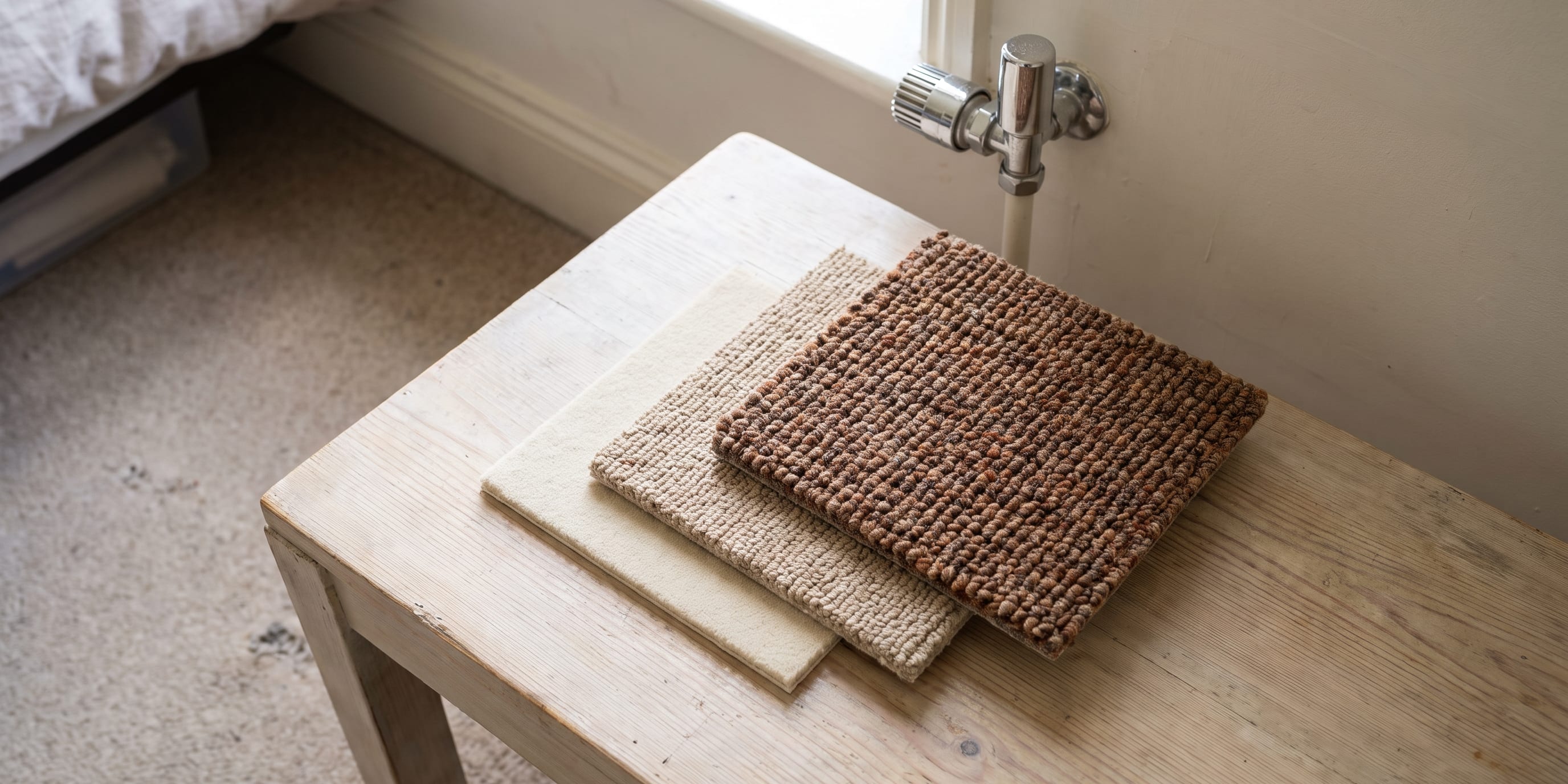
- Ask for the tog figure of the specific carpet you are considering, not the range. Figures vary between weights and constructions within the same family.
- Ask what the recommended underlay is and what its tog rating is. Then add the two together yourself so you know the combined tog for each room.
- Say if any room has underfloor heating, and say which rooms. Mention whether it is a water based or electric system, and share any maximum tog the manufacturer specifies.
- Flag rooms over cold spaces, such as a bedroom above a garage or a lounge on an uninsulated solid floor. These are the rooms where extra warmth genuinely pays back.
- Ask whether the underlay recommendation changes on the stairs. It very often should, and a good fitter will say so unprompted.
- Check whether door clearances are affected. A warmer, thicker build up raises the floor level, and internal doors sometimes need easing. Better to know in advance.
None of this requires you to become an expert. It just means the person specifying your floor has the information to get the combination right, which is the point of having someone measure in person at all.
Tog is a small part of a carpet decision, but it is the part most often misread. Treat it as a comfort and efficiency measurement, keep durability decisions separate, and always work with the combined tog of carpet and underlay rather than either number alone. If you would like help matching the right carpet and underlay pairing to each room in your home, including anything fitted over underfloor heating, take a look at Boundary’s carpet range and fitting service and book a free measure at a time that suits you.
Questions
Frequently Asked Questions
Does a higher tog rating mean a better quality carpet?
No. Tog measures thermal resistance only. A thick, high tog carpet can wear badly in a busy hallway, while a dense low pile carpet with a modest tog rating can last for years. Judge quality on fibre, density and twist, and treat tog as a separate comfort measurement.
What tog rating do I need for underfloor heating?
The widely used guideline is a combined total of no more than 2.5 tog for the carpet and underlay together. Above that, the floor covering starts to insulate the room from its own heat source, so the system works harder for less warmth.
Is carpet tog or underlay tog more important?
Neither on its own. The figure that matters is the two added together, because that is what sits between your feet and the subfloor. Underlay usually contributes the larger share of the total.
Can I use a thick underlay on stairs to make them feel softer?
It is not advisable. Stairs need a firm, dense underlay so the carpet is properly supported over the nosings. An overly thick or soft underlay on stairs can cause the covering to move and wear prematurely.
How do I find out the tog rating of a carpet I like?
Manufacturers publish tog figures for most ranges, and your fitter or retailer can check the specification before you order. If a figure is not published, ask, especially when underfloor heating is involved.