How Long Does a Carpet Actually Last? A UK Buyer’s Guide
How Long Does a Carpet Actually Last?
Search this question and you will be told a carpet lasts five to fifteen years. That range is so wide it is almost useless. It covers a polypropylene bedroom carpet that will still look fine when the children have left home, and a hall runner that was flattened and greying within a few winters. What most people actually want to know is narrower and more practical: is mine near the end, and if it is, what should I do about it?
It helps to know that carpets fail in two stages. First the pile loses its spring in the traffic lanes, so the hallway looks grey while the carpet under the sideboard still looks new. Later the structure goes: tufts shed, backing shows, seams open. The first stage is gradual. The second is not, and that is when the decision makes itself.
Realistic lifespans by carpet type
Fibre is the single biggest factor in how a carpet ages, but each option trades one virtue for another. There is no fibre that wins on everything.
Wool. Wool has natural crimp, which means the fibres recover their shape after being compressed. That is why a good wool carpet holds its appearance for a long time in rooms with moderate traffic, and why it feels the way it does underfoot. Wool is also naturally flame resistant and handles humidity well because it absorbs and releases moisture without feeling damp. The trade-offs are honest ones: wool is more absorbent, so spills need dealing with promptly, it can be prone to shading and fading in strong direct sunlight, and it costs more up front. In a lounge or main bedroom it is often the longest lasting choice by appearance. In a wet hallway it is not always the sensible one.
Wool-blend twist. The classic British compromise, usually wool combined with a synthetic fibre. The wool contributes resilience and handle, the synthetic adds abrasion resistance and reduces cost. Twist pile itself matters here: the yarn is tightly twisted and heat set, which helps individual tufts stay upright under traffic. A dense wool-blend twist is arguably the best all-round choice for stairs and landings in a family home, because it takes punishment without looking scruffy quickly. It is not as soft as a plush pile and not as bleach-tolerant as a pure synthetic.
Polypropylene. Solution dyed, which means colour runs through the fibre rather than sitting on it, so it resists stains and can generally cope with dilute bleach cleaning. That makes it a genuinely practical choice for playrooms, rentals and homes with pets. Its weakness is resilience. Polypropylene fibres do not spring back the way wool does, so in heavy traffic the pile crushes and flattens sooner. It handles the stain but shows the wear. Choose a dense, heavy weight construction if you want it to last, because low density polypropylene is where the shortest lifespans in the market come from.
Nylon. The most abrasion resistant of the common synthetics and the best synthetic for bounce back. Nylon holds pile height under sustained traffic better than polypropylene and is a strong option for stairs and busy hallways. It costs more, and unless it has a stain treatment applied it is more receptive to spills. Availability in domestic ranges is narrower in the UK than in some markets, so it is worth asking specifically.
Density and weight then modify all of it. A heavy, dense polypropylene will outlive a thin, sparse wool.
Underlay and fitting: the part nobody sees
Here is the uncomfortable truth about carpet lifespan. Two identical carpets, bought on the same day, can be years apart in how long they last, purely because of what is underneath them and who laid them.
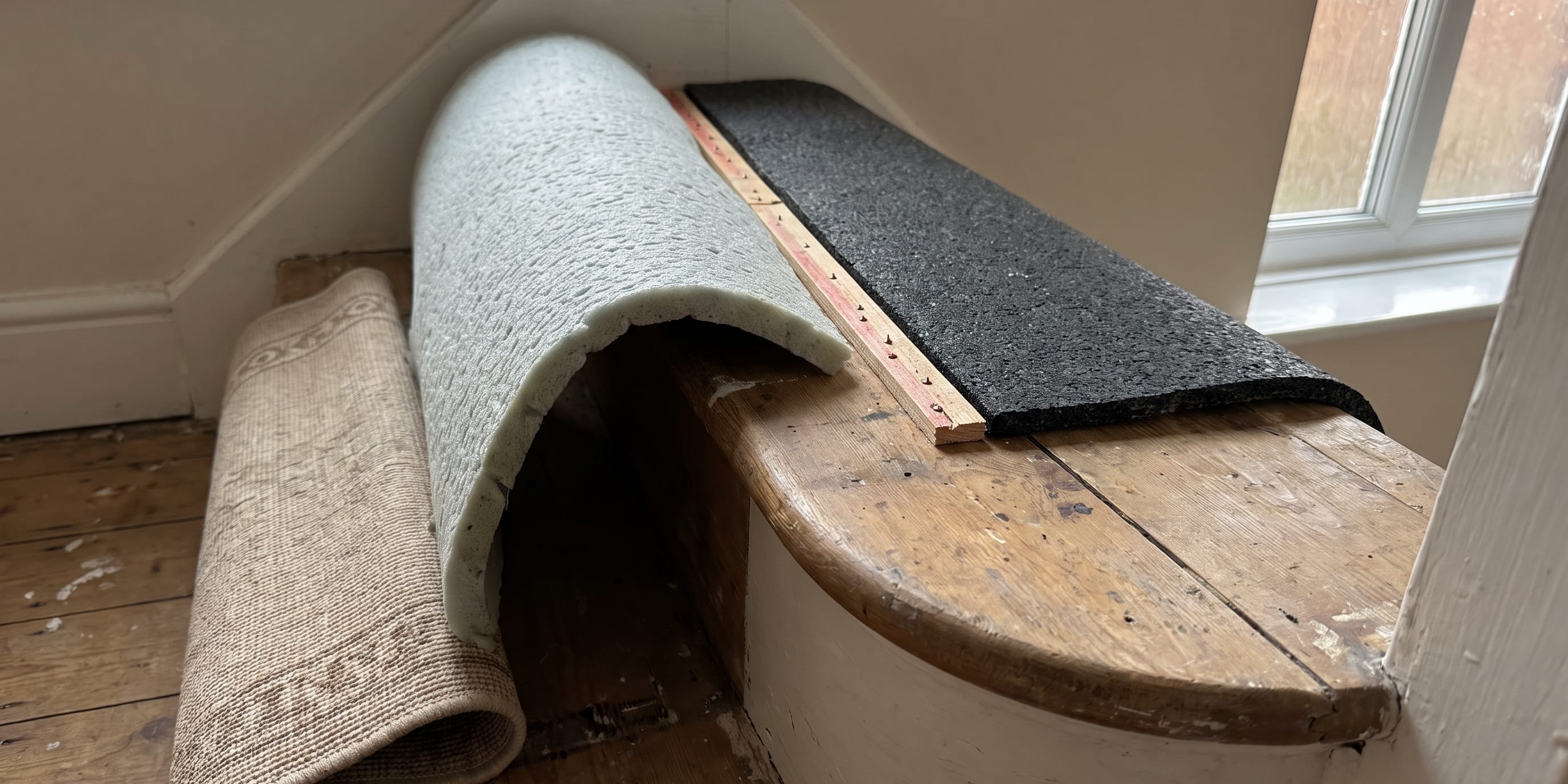
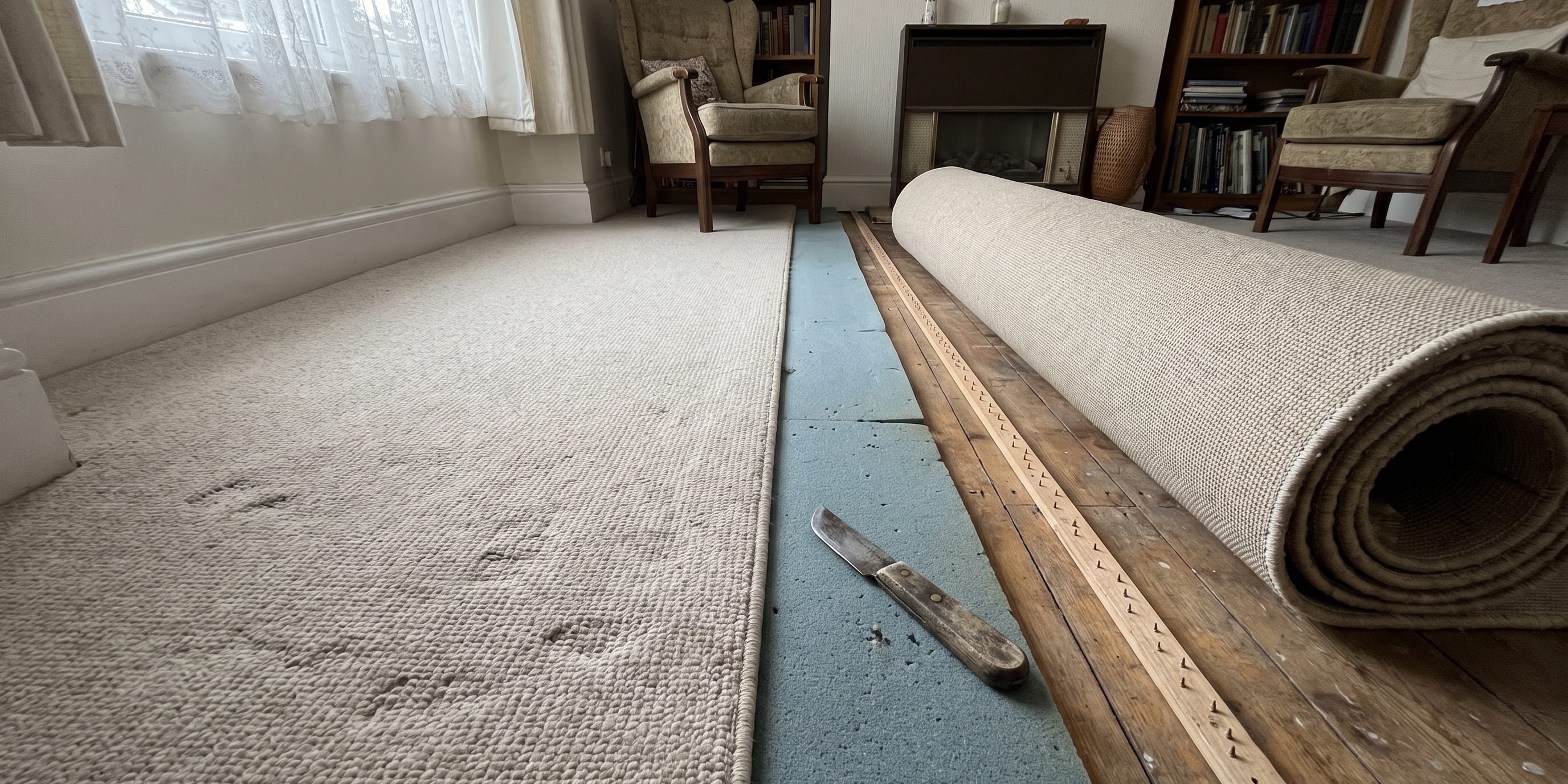
Underlay absorbs the impact of every footstep. Without it, the carpet backing takes that force directly against the subfloor, and the pile crushes far faster. Good underlay also improves insulation and sound, but its primary job is protecting your investment. Crucially, underlay compresses over time. Re-using twenty year old underlay under a brand new carpet is a false economy that shortens the new carpet’s life from day one, and the labour cost of replacing it while the floor is already lifted is minimal by comparison.
Thickness is not the same as quality. A very thick, very soft underlay can allow too much movement, which flexes the backing and stresses seams, particularly on stairs where firmer underlay is usually the right specification. The correct choice depends on the room, the carpet construction and the subfloor.
Fitting matters just as much. A carpet that is not stretched to the right tension will ripple within a year or two, and every ripple becomes a wear line where feet catch it. Seams placed in a traffic path rather than tucked out of the way will open eventually. Gripper set at the wrong distance from the skirting leaves the edge vulnerable. Stairs are the most demanding job for Boundary’s fitting service, and how the carpet is wrapped and secured on each nosing determines whether the edges survive.
None of this is visible when the job is finished. It only shows up in year five.
British homes, British wear factors
Underfloor heating. Increasingly common in extensions and renovations, and entirely compatible with carpet, but the maths has to be right. Carpet and underlay both resist heat transfer, and heating manufacturers specify a maximum combined thermal resistance for anything laid over the system. Exceed it and you get an underperforming, expensive floor. Low tog underlays exist specifically for this, and the carpet’s own figure needs checking too. Constant gentle warmth also dries fibres, which is a further argument for a resilient construction.
Damp and humidity in older properties. Solid floors without a modern damp proof membrane, cold north facing rooms and poorly ventilated hallways all raise moisture levels at floor level. Persistent damp degrades backing adhesives, encourages mould in underlay and shortens the life of any carpet laid over it. If a carpet has failed early in one specific room, the room is usually the reason, not the carpet. Investigate before you buy a replacement, or you will be buying two.
Stairs versus bedrooms. Stairs concentrate the entire household’s traffic into a narrow strip, and every step lands on the nosing rather than flat on the tread. It is normal for a stair carpet to be visibly tired while the identical carpet in the bedrooms looks nearly new. Plan for it. Specifying a tougher construction for stairs and halls, even if it means a different product from the bedrooms, often works out better value than replacing the whole house because one area gave up.
Repair, re-stretch, or replace: a checklist
Work through this honestly.
A fitter can probably help if:
- The carpet ripples, waves or lifts underfoot but the pile itself still stands up and shows even colour. This is tension, and re-stretching addresses it.
- A seam has opened but both sides of it are in good condition.
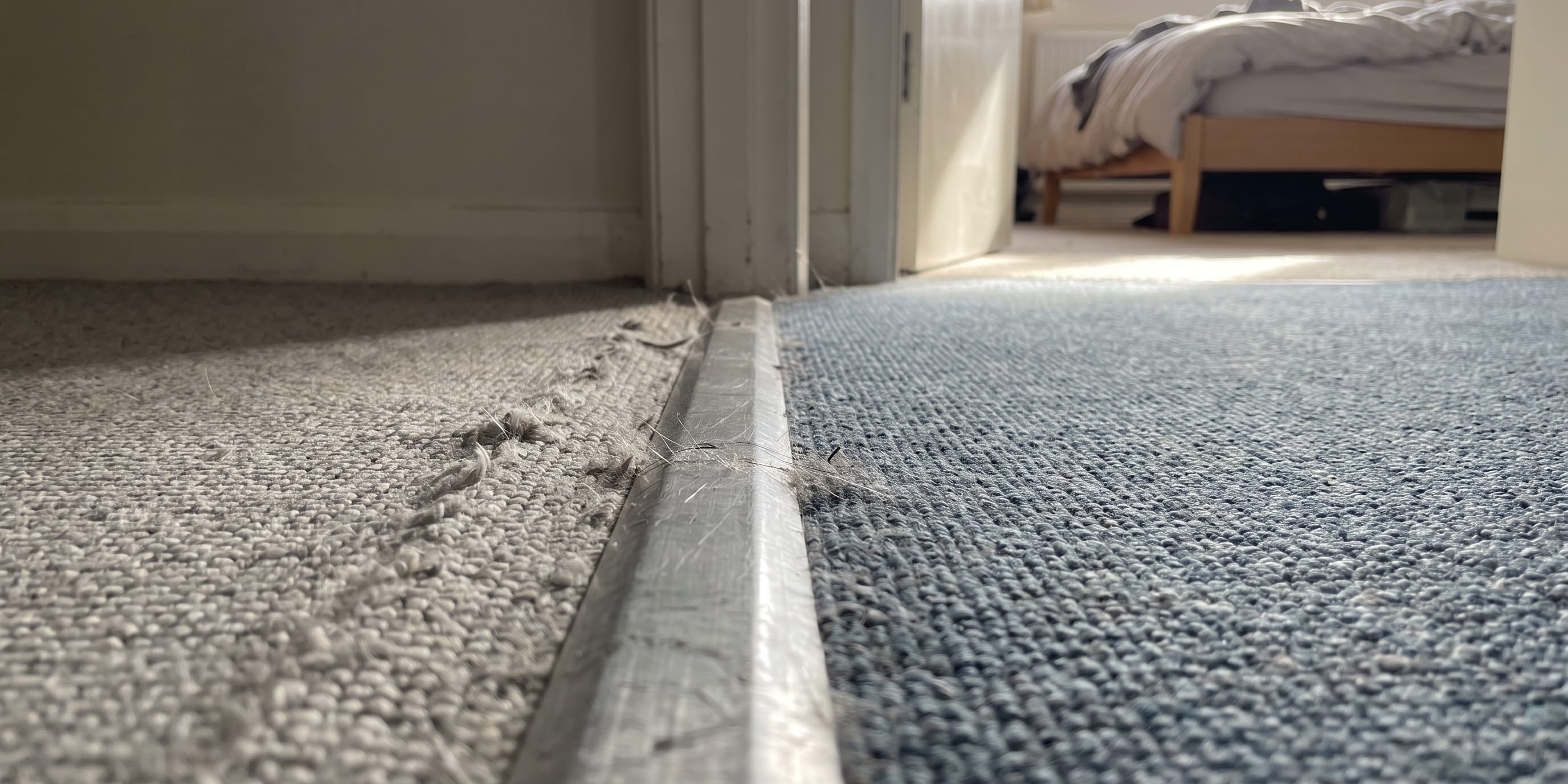
- The edge has lifted off the gripper in one area, or a threshold bar has come loose.
- There is localised damage from a single incident, a burn or a pet, in a carpet that is otherwise sound and where you have an offcut. A patch or a small section replacement is realistic.
- Doors catch because the carpet has shifted, rather than because the pile has changed.
Replacement is the sensible answer if:
- Backing is visible through the pile in traffic lanes. Once the tufts have gone, nothing brings them back.
- The pile is permanently flattened across a whole area and does not recover after cleaning or grooming.
- Multiple seams are failing at once, which usually indicates the backing has reached the end of its working life.
- The carpet is thinning across large areas rather than in one spot.
- You are re-stretching repeatedly. A carpet that goes slack again within months has lost its dimensional stability.
- The underlay beneath is compressed flat, crumbling or damp. Even a serviceable carpet will not last long over a failed base.
Notice what is not on this list: smells and stains. Those are cleaning questions, and a professional clean will often resolve them on a structurally sound carpet. Replacing a good carpet because of a stain is an expensive way to solve a cleaning problem, and being told otherwise is usually a sign of who you are asking.
What to expect from a measure and fit visit
If the checklist points to replacement, the next step is booking a measure, and a proper visit is more diagnostic than it sounds.
The measurer will take room dimensions, but they will also be planning how to cut the roll. Carpet comes in fixed widths, and how those widths are laid out determines where seams fall and how much waste there is. Getting this right in a house with awkward hallways and multiple doorways is where experience shows. They will check the subfloor, look for signs of damp, note whether floorboards need attention, and ask about underfloor heating, gripper condition and door clearances. On stairs they will count and measure treads, risers and any winders, which change the calculation considerably.
You should come away with a clear picture of what you are buying: the carpet, the underlay specification, the fitting method, the uplift and disposal of the old floor covering, and any accessories such as door bars. Samples are worth viewing in your own light rather than under showroom lighting.
The honest answer to how long a carpet lasts is that you have more control over it than the standard five to fifteen year range suggests. Choose the fibre that suits the room rather than the one that suits the brochure, do not economise on underlay, and make sure it is fitted by someone who will still be reachable in a year. If the checklist points towards replacement, take a look at Boundary’s carpet range and fitting service and arrange a measure, so the next carpet gets the fair start the last one may not have had.
Questions
Frequently Asked Questions
How long does a carpet actually last in a typical UK home?
Most carpets sold in the UK give somewhere between five and fifteen years of good service, but the range is wide because fibre type, underlay, fitting quality and traffic all pull the figure up or down. A hall and stair carpet in a busy family home may be tired in under a decade, while a spare bedroom carpet of the same specification can look presentable far longer.
Does expensive carpet last longer than cheap carpet?
Not automatically. Price often reflects fibre, pile density and finish, all of which matter, but a well specified mid-range carpet fitted over good underlay by a competent fitter will usually outlast a premium carpet laid over flattened old underlay with poorly joined seams.
Can a carpet be re-stretched instead of replaced?
Often, yes. Ripples and slack across an otherwise sound carpet are usually a tension issue rather than a wear issue, and a fitter can lift, re-stretch and re-trim it. This only makes sense if the pile itself still has life left in it.
Do I need to replace my underlay when I replace my carpet?
In most cases it is worth doing. Underlay compresses over years of use, so old underlay under a new carpet undermines the comfort and shortens the life of the new floor covering. It is also far cheaper to replace while the floor is already up.
Is carpet suitable over underfloor heating?
Yes, provided the combined thermal resistance of carpet and underlay stays within the limits your heating manufacturer specifies. Choose a low tog underlay designed for the purpose and check the figures for both layers before ordering.