How Soon Can You Walk on New Flooring After Fitting?
It is one of the first things people ask as the fitting team starts packing up. The room looks finished, the skirting is clean, the off-cuts are in the van, and there is a natural urge to walk in, put the sofa back and get the house working again.
The honest answer is that it depends entirely on what has just been fitted and how it was fitted. A power-stretched carpet and a fully adhered vinyl are two completely different jobs with two completely different waiting periods. Most of the advice online covers solid and engineered wood, which is not what the majority of homes actually have fitted. So here is the practical version, product by product.
The short version
- Stretched carpet over gripper and underlay: walk on it straight away.
- Glued-down carpet: stay off it for the period your fitter specifies, usually at least overnight.
- Click or loose-lay LVT and vinyl: walk on it straight away.
- Fully adhered vinyl or LVT: stay off it until the adhesive has set, commonly around a day.
- Laminate (floating): walk on it straight away, but go easy on it for the first day.
- Furniture, in every case: longer than foot traffic. More on that below.
Those are typical timings. The number that actually matters is the one your fitting team gives you on the day, because it accounts for the specific adhesive used, the subfloor, the room temperature and the ventilation. If you are ever unsure, ask before they leave.
Carpet: stretched versus glued down
Power-stretched carpet
This is the standard domestic method: gripper rods around the perimeter, underlay laid and fixed down, then the carpet stretched onto the gripper with a knee kicker or a power stretcher.
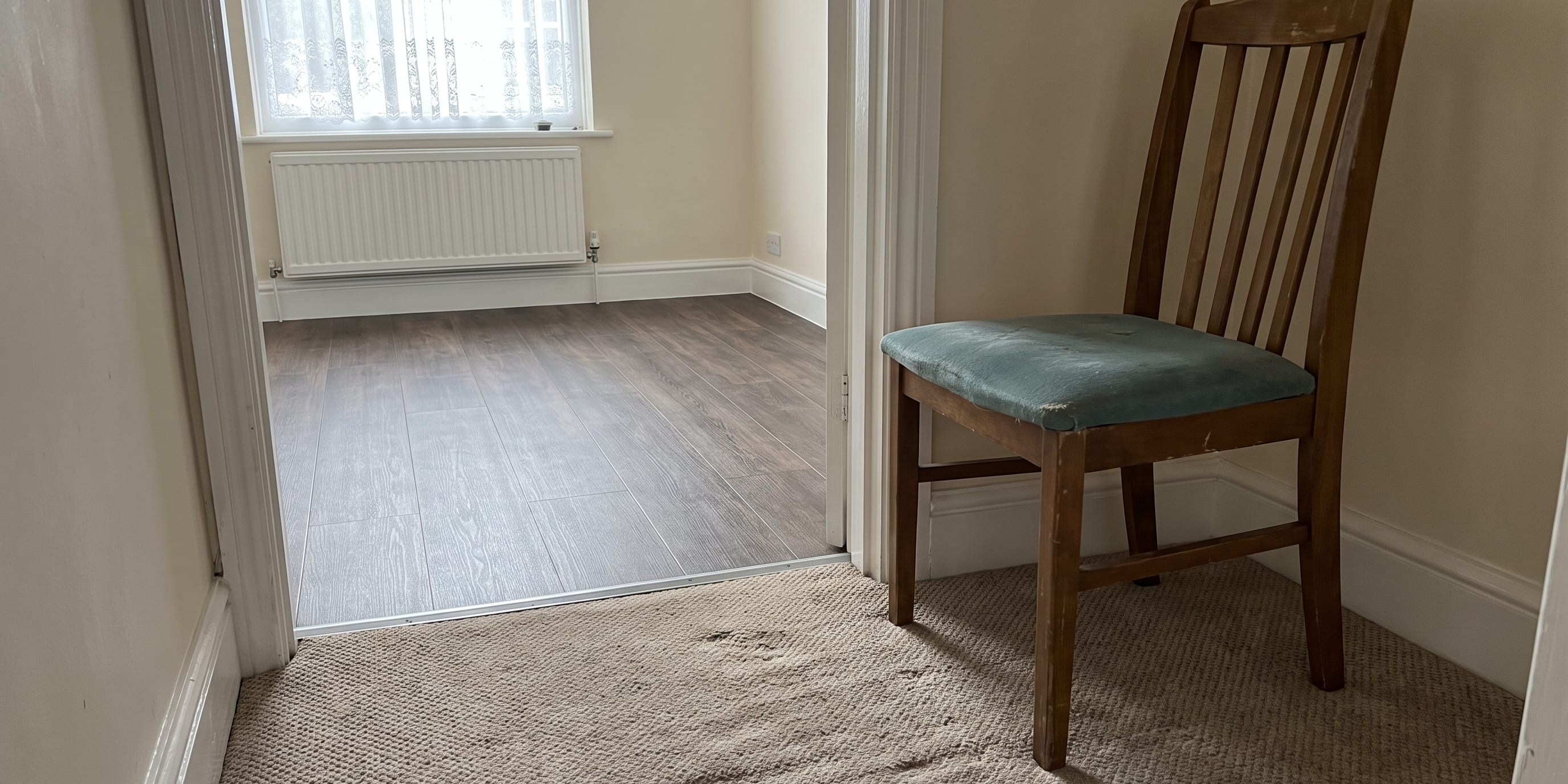
There is no adhesive holding the carpet itself to the floor, so there is nothing that needs to cure. Once the fitter has trimmed the edges, finished the doorways and vacuumed up, the room is ready to use. You can walk on it in socks, in shoes, with the dog, immediately.
What happens over the following days is settling rather than curing. A new carpet and new underlay compress slightly under real-world use, and the fibres relax into their new shape. That is normal and expected. A properly stretched carpet does not go baggy as a result; the stretch is what stops that happening in the first place.
Expect some shedding in the first few weeks, particularly from wool-rich cut piles, and possibly some shading or pressure marks where the roll was folded in transit. Neither is a fault, and both ease as the pile beds in.
Glued-down carpet
Some carpets, particularly heavy-duty loop piles and carpet tiles, are bonded directly to the subfloor with adhesive. Here the rules change completely.
The adhesive needs time to grip before anything disturbs the carpet. Walking on it too early can shift the carpet a few millimetres, which is enough to open a seam or create a ridge that sets permanently. The usual guidance is to stay off it until at least the following day, with the exact timing depending on the adhesive and the conditions in the room. Your fitting team will tell you which method has been used before they leave.
Vinyl and LVT: the biggest difference in waiting times
Click and loose-lay
Click LVT works like laminate: planks lock together and float over the subfloor without adhesive. Loose-lay vinyl and loose-lay LVT sit on the subfloor under their own weight, sometimes with a tackifier or a perimeter bond. Both can be walked on as soon as fitting is complete, because there is nothing setting underneath.
The caveat is movement. A floating floor needs its expansion gap around the perimeter to work properly, and dragging anything heavy across it in the first day or two can nudge planks apart at the joints before the floor has settled into position. Walk on it freely; just do not slide a fridge over it.
Fully adhered vinyl and LVT
This is where patience pays off. Sheet vinyl and glue-down LVT are laid into adhesive spread across the subfloor. That adhesive goes through two stages: it sets, meaning it holds the floor in place, and then it cures, meaning it reaches full strength.
Walking on it before it has set can slide tiles, open joints, or push adhesive up through seams. The usual advice is to keep off a freshly adhered floor until the adhesive has set, often around a day, though it genuinely varies by product, by subfloor absorbency and by how warm and ventilated the room is. A cold, poorly ventilated room slows everything down.
Two more points specific to adhered floors. First, do not wet mop for the first few days. Water at the seams before the adhesive has cured is the quickest way to cause a problem, so dry sweeping only. Second, if the floor has been welded at the seams or had a sealer applied, your fitter will give you a separate timing for that.
Laminate: fast to walk on, slower for heavy furniture
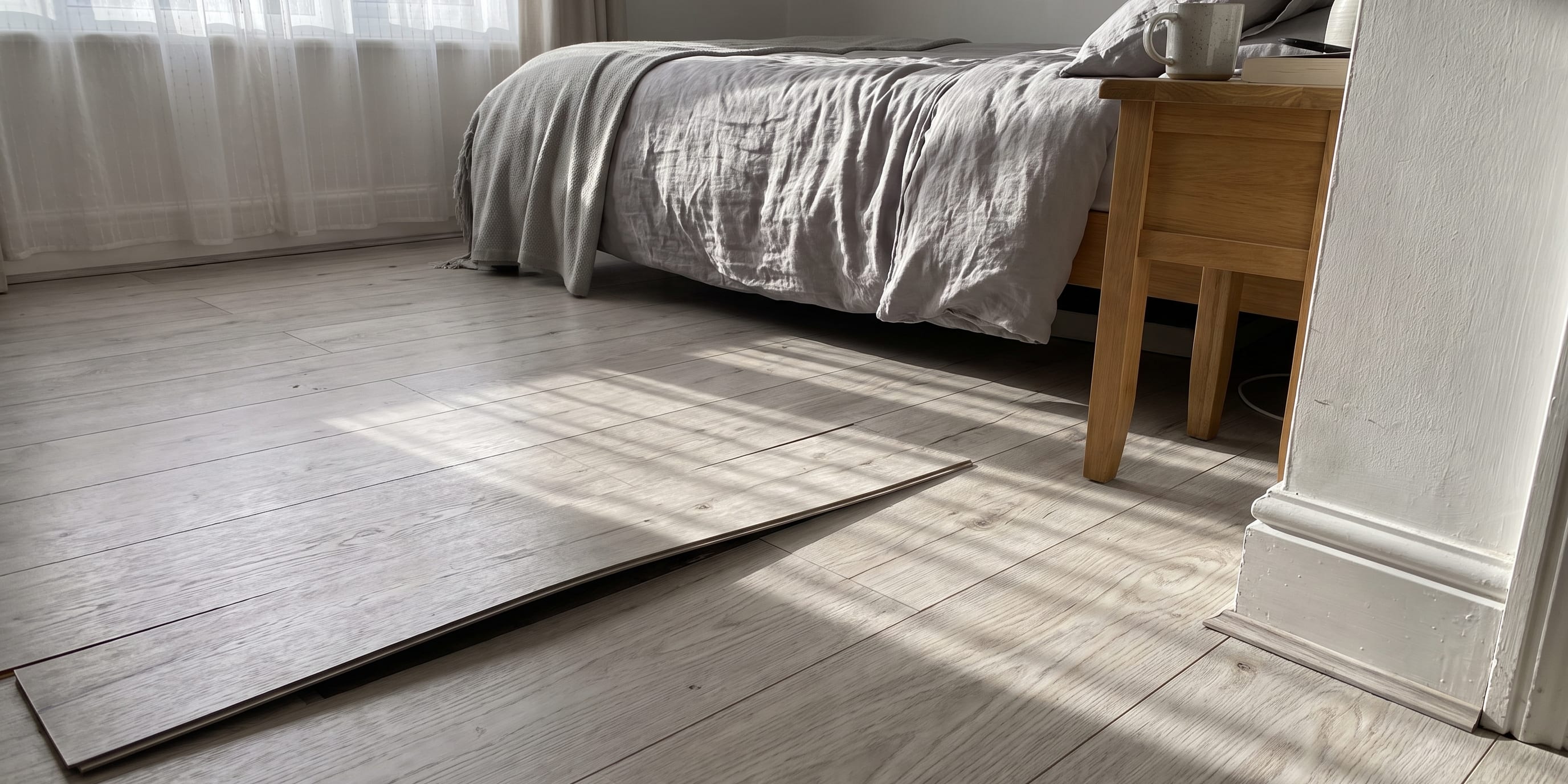
Laminate is a floating floor. The planks click to each other, not to the subfloor, and sit on an underlay with an expansion gap around the edges. There is no adhesive, so foot traffic is fine straight away.
What laminate does need is acclimatisation and settling. Boards are normally left in the room before fitting so they reach the temperature and humidity of the space, which prevents them expanding or contracting badly afterwards. Once laid, the floor continues to settle for a day or so as it finds its position within the expansion gaps.
During that period, avoid putting very heavy items back, particularly anything that spans several boards and pins them down, such as a large wardrobe or a bookcase. Pinning a floating floor stops it moving as a single sheet, and that is what causes peaking at the joints or gaps opening elsewhere in the room later on.
Why furniture waits longer than feet
This is the part that catches people out. Foot traffic is transient: your weight is spread over a reasonably large area and it moves on within a second. Furniture is static load on a small point, hour after hour, day after day.
On an adhesive floor, the adhesive may have set enough for walking while still being soft enough to be displaced by a concentrated load. A sofa leg or a table foot can press the floor down into the adhesive and leave a permanent dip or a lipped joint. On a carpet, heavy furniture put back too early can crush the underlay before it has bedded in evenly, leaving marks that take far longer to recover.
A sensible approach:
- Allow longer than the walking time before anything heavy goes back. On adhesive floors, that typically means waiting for a full cure rather than just a set, and your fitter will tell you what that means for your installation.
- Lift, never drag. Dragging is what causes most post-fitting damage, on every type of floor.
- Use felt pads under hard furniture legs on laminate, LVT and vinyl, and wide furniture cups on carpet to spread the load.
- If appliances have to go back sooner, put a board down and slide them over that rather than directly on the new floor.
The first 24 to 48 hours: do’s and don’ts
Do wear socks or clean soft shoes rather than outdoor footwear, especially on carpet. Grit tracked in on shoe soles is abrasive, and a brand new pile has nothing to protect it yet.
Don’t let pets have free run of a glued floor during the waiting period. Claws, scratching and sudden sprinting are the enemy of an adhesive that has not yet set.
Do keep the room at a normal, steady temperature with reasonable ventilation. Adhesives cure best in sensible conditions. Resist the urge to crank the heating to speed things up, as that can cause the surface to skin over while the layer underneath stays soft. Equally, a cold damp room will stall the process.
Don’t turn underfloor heating straight back up to full. It is usually switched off before fitting and should be brought back on gradually, following the manufacturer’s instructions for the floor you have had fitted.
Do vacuum carpet gently after a day or two to lift loose fibre and fitting debris. Suction only or a light setting to begin with, and avoid aggressive beater bars on new loop pile, which can snag the loops.
Don’t wet clean any new hard floor in the first few days. Sweep, or use a dry microfibre head.
When to call the fitting team back
Most new floors settle without any issue. If something still looks or feels wrong once the waiting period has passed, it is worth a phone call rather than a wait-and-see. Get in touch if you notice:
- A ridge, bubble or soft spot underfoot on a carpet that has not flattened out within the first week.
- Joints lifting, peaking or separating on laminate or click LVT.
- Edges or corners curling on sheet vinyl or glue-down LVT.
- Any movement or sliding on a floor that is supposed to be adhered.
- Gripper that can be felt through the carpet at a doorway or along an edge.
- A door threshold or trim that has lifted or come loose.
The sooner a genuine issue is looked at, the easier it usually is to put right. Ridges in carpet, for instance, can often be re-stretched quickly, but are far harder to deal with once the pile has been walked flat in that position for months.
The practical takeaway is to plan the fitting day around the floor you are having. Stretched carpet throughout means the room is usable the same evening; a fully adhered vinyl in a kitchen means planning for the room to be out of action overnight and keeping the appliances out until the following day. If you want to know more about how we approach the installation itself, from uplift and disposal to doors, thresholds and finishing, have a read of our carpet fitting service page. And if you are still choosing between carpet, vinyl, LVT or laminate and want to talk through which suits the room and your timescales, book a free measure with Boundary Carpets & Beds and we will go through the options with you at home.
Questions
Frequently Asked Questions
Can you walk on a new carpet straight away?
In most cases, yes. A power-stretched carpet over gripper and underlay is ready for normal foot traffic as soon as the fitting team has finished and cleared up. Glued-down carpet is the exception, because the adhesive underneath needs time to grab.
How long before you can walk on new LVT?
Click and loose-lay LVT can usually be walked on immediately. Fully adhered LVT laid into a spread adhesive needs the adhesive to set first, commonly a day or so, and heavy furniture should wait longer again.
When can I put my furniture back on a new floor?
Furniture almost always waits longer than foot traffic. Walking spreads your weight and moves on; a sofa leg or a wardrobe presses on one small point for days. On adhesive floors, wait until the adhesive has properly cured rather than just set, and use felt pads or wide cups under the legs.
How long should I wait before vacuuming a new carpet?
You can vacuum gently after the first day or two to pick up loose fluff and fitting debris. Use suction only or a light beater setting at first, and expect shedding from a new cut pile carpet for several weeks. That fluff is normal.