
Is Underlay Included in Carpet Prices? What to Check
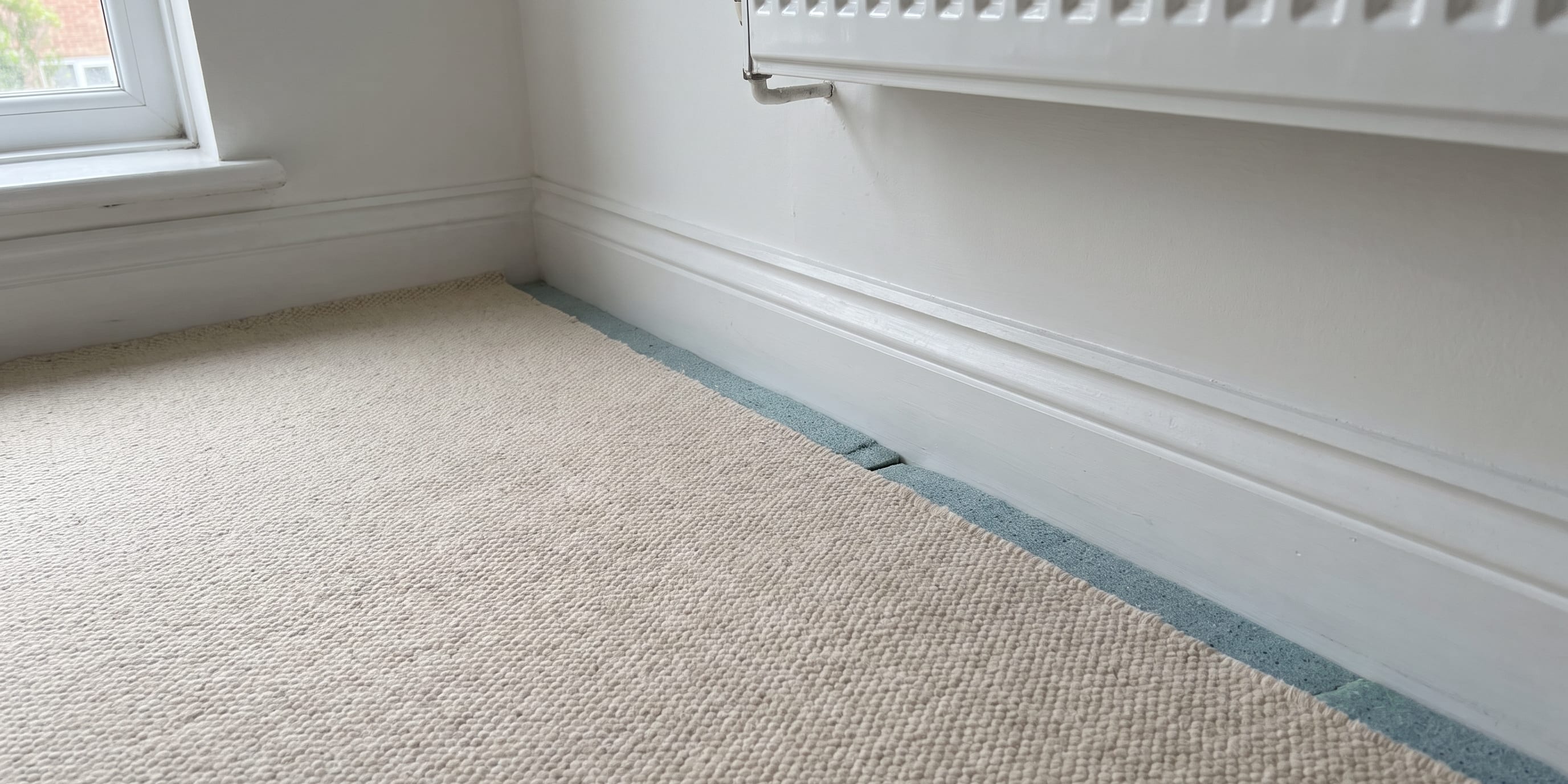
Ask three carpet retailers for a price on the same room and you can easily get three figures that look nothing alike. That is rarely because one is fleecing you and the others are being generous. More often it is because each one has drawn the line in a different place around what the price actually covers.
Underlay is the usual culprit. It sits out of sight under the carpet, it is genuinely essential, and it is the single most common item to be present in one quote and absent from another. So the honest answer to "is underlay included in carpet prices" is: it depends on the quote, and you need to ask.
This guide explains how carpet pricing is normally structured, where underlay fits into it, and what else has a habit of going missing from a headline figure.
The two ways carpet gets priced
Almost every carpet quote you will see falls into one of two camps.
Carpet-only pricing. The price you are given is for the carpet itself, measured in square metres, and nothing else. Underlay, gripper, door bars, fitting and disposal are all separate. This is the model you will typically find on shelf edges in a shop and on most carpet product pages online, because it is the only figure the retailer can state honestly before anyone has seen your room.
All-inclusive pricing. The price covers the carpet plus a defined bundle of everything needed to get it down: underlay, gripper, fitting and often the trims at doorways. It is usually still expressed per square metre, which is what makes it so easy to confuse with the first type.
Both are legitimate. The problem is that a carpet-only price and an all-inclusive price for the same room, written the same way in pounds per square metre, can sit side by side on a kitchen table and look like a straight comparison when they are nothing of the sort. The cheaper-looking one may well cost you more by the time the job is finished.
So the first question is never "how much?". It is "what does that figure cover?".
How underlay usually gets priced
Underlay prices are quoted by the square metre, in much the same way carpet is, but how that figure reaches you varies in a few predictable ways.
Bundled into the per-square-metre rate. The retailer has chosen a standard underlay, built the underlay price into the carpet rate and quotes you one number. This is clean and easy to understand. The thing worth asking is which underlay is in the bundle, because the standard choice in a deal is generally a sensible mid-range option rather than the thickest or densest available. If you want something heavier underfoot, or a specific grade for a stair run or a room with underfloor heating, there may be an upgrade cost.
Quoted as a separate line per square metre. Here the underlay has its own rate and its own total on the quote. This is arguably the more transparent approach, because you can see exactly what you are paying for and swap grades up or down without the whole price becoming a mystery. It also makes it obvious when underlay has not been included at all.
Priced by area but fitted to a different measurement. Worth knowing: the amount of underlay needed is not always identical to the amount of carpet. Carpet comes in fixed widths and has to be cut to work around the shape of a room, so there is unavoidable waste. Underlay comes in narrower rolls and is laid in strips, so it tends to track the floor area more closely. A quote that lists them as separate quantities is not an error.
Grade matters too, and it is the main reason underlay prices differ between quotes. Thicker, denser products cost more per square metre and generally feel better underfoot and last longer. Stairs, hallways and busy living rooms justify a firmer specification than a spare bedroom does. If one quote looks noticeably cheaper on the underlay line, the likely explanation is a lighter grade rather than a better deal.
One thing that should not vary is the recommendation to use new underlay. It compresses over time, and the cushioning that protects your carpet’s fibres from the floor beneath is exactly what wears out first. Fitting an expensive new carpet onto fifteen-year-old underlay throws away a good part of what you have paid for. If your existing underlay happens to be recent and in good condition, a fitter will say so once the old carpet is up, but it is not something to plan around.
What else goes missing from a quote
Underlay is the big one, but it is not the only item that can quietly sit outside a headline price.
Gripper rods. These are the thin battens, studded with angled pins, that run around the perimeter of the room and hold the carpet under tension. They are inexpensive individually, but they are replaced as a matter of course on most jobs and they add up across a whole house. A quote that includes fitting usually includes gripper, but it is worth confirming rather than assuming.
Door bars and threshold trims. Wherever your new carpet meets another floor covering, at a doorway into a tiled kitchen or a wood-floored hall, something has to cover the join. Trims come in different profiles and finishes, and a house with several doorways can need a surprising number of them. These are a classic separate line item.
Uplift and disposal of the old carpet. Lifting an old carpet, pulling up the backing that has stuck to the floor, removing the old gripper, bagging the lot and taking it to a licensed waste site is real work with a real cost. Some quotes include it, some charge for it, and some assume you will handle it yourself. If you are not told either way, ask, because discovering on fitting day that a skip-load of old carpet is your problem is a poor start.
Furniture moving. Most fitters will shift reasonable furniture as part of the job, but heavy items, fitted wardrobes, pianos and anything that needs dismantling may be treated differently. Mention anything unusual at the quoting stage.
Floor preparation. If the subfloor needs levelling, or old adhesive needs removing, or floorboards need securing, that is additional work. It is not always visible until the old carpet comes up, which is one more reason to have a measure done by someone who can flag it early.
The questions to ask before you commit
You do not need to interrogate anyone. Five short questions will tell you almost everything.
- Is underlay included, and if so, which one? Not just yes or no, but the type and grade, and what an upgrade would cost.
- Does the price include fitting, gripper and door bars? Ask about trims specifically, since they are easy to overlook until fitting day.
- Is uplift and disposal of the old carpet included? And if not, what would it cost to add?
- Is this figure fixed, or an estimate? A quote based on an in-person measure should be a firm price. A figure given over the phone from rough room sizes cannot be.
- Is there anything that could change the price once the old carpet is up? An honest answer here is usually "the subfloor might need attention, and we would tell you before doing anything".
Write the answers down. If you are comparing two retailers, put their answers side by side and you will often find the gap between them was never really about the carpet.
Why a free measure and written quote settles it
Room sizes are the other reason quotes diverge. Carpet is manufactured in set widths, and a room that is a fraction wider than the roll needs a join or a second length, which changes the material cost considerably. Doorways, bay windows, alcoves and the direction the pile needs to run all affect how a room is cut. None of that can be judged from a tape measure reading taken quickly over the phone.
A proper measure takes account of all of it, and the resulting written quote gives you a single figure with the components listed underneath. That document is what protects you. It means nobody is working from a different understanding of the job on fitting day, and it gives you something concrete to compare against anyone else you have spoken to.
If you would like to see the options and understand exactly what a finished price covers, have a look at Boundary’s carpet range and fitting service, then book a free measure and written quote so you know what your room needs before you decide anything.
Questions
Frequently Asked Questions
Is underlay included in carpet prices?
Sometimes. Some retailers quote an all-inclusive price per square metre that covers carpet, underlay, gripper and fitting. Others quote the carpet alone and add underlay as a separate line. Neither approach is wrong, but you cannot compare two quotes until you know which one you are looking at.
Do I need new underlay when I replace a carpet?
Usually yes. Underlay compresses over the years and loses the cushioning that protects the carpet above it. Laying a new carpet over tired underlay shortens its life and undoes much of the comfort you are paying for. Occasionally underlay is young enough and clean enough to reuse, and a fitter can tell you once the old carpet is lifted.
What is gripper and should it be on my quote?
Gripper is the thin strip of wood with angled pins that holds a carpet taut around the edge of a room. It is replaced as a matter of course in most fitting jobs, and the cost is small, but it should still appear somewhere on your quote rather than arriving as a surprise.
Who takes away the old carpet?
That depends entirely on the quote. Uplift and disposal is a separate task with a real cost attached, because old carpet and underlay have to be removed, bagged and taken to a licensed waste site. Always ask whether it is included or whether you are expected to deal with it.
Should a measure and quote cost anything?
A measure and written quote is normally offered free of charge. It is the only reliable way to get an accurate figure, because room sizes, doorways and the direction the carpet has to run all affect how much material is needed.