
Double Beds with Headboards: Getting the Match Right
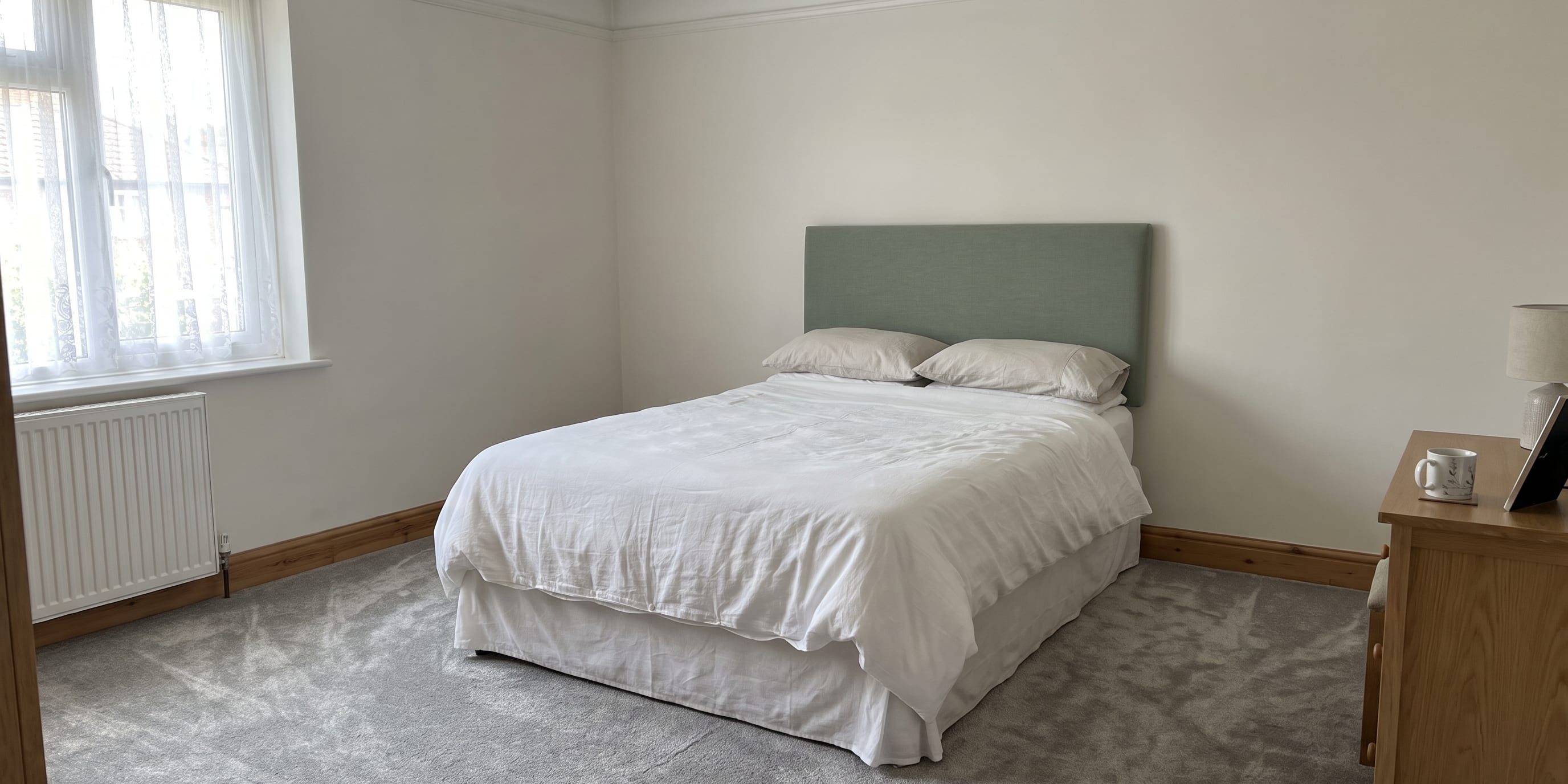
A headboard looks like a simple purchase. You pick the one you like, it arrives, it bolts on. In practice, it is one of the more common things people get wrong when buying a bed, because the decision involves measurements that are easy to overlook until the box is open and the fixings do not line up.
This guide walks through the practical decisions behind pairing a double bed with a headboard: how sizing actually works, which attachment method suits your room, how height interacts with sockets and windows, which materials last, and what to confirm before you place the order. The aim is to make the choice once, correctly, rather than discovering the problem on delivery day.
Sizing: why width tolerance matters more than you would think
A UK standard double mattress measures 4ft6 by 6ft3, which is 135cm by 190cm. That is the mattress. The frame or divan around it will be wider, and by how much depends entirely on the construction. A slim metal frame adds very little. An upholstered frame with padded side rails can add a noticeable amount on each side.
Headboards sold as "double" are not all cut to the same width, and that is deliberate rather than careless. Some are sized to finish flush with the edge of a standard divan. Others are made intentionally wider so they overhang the bed on both sides, which is a design choice that suits larger rooms and reads as more generous. Neither is wrong, but if you are expecting flush and you get overhang, the bed will not sit neatly against the wall in a narrow alcove.
So the number to write down is not "double". It is the actual width of your base in centimetres, measured across the widest point, and the stated width of the headboard you are considering. Then decide which look you want.
The second measurement that matters is strut spacing on bolt-on headboards. The struts are the two vertical legs that drop down behind the base and carry the bolts. They need to align with pre-drilled holes in the divan or frame. Measure centre to centre between your fixing points and compare that with the headboard specification. Bolt diameter and thread matter too, though most UK beds use a common size.
Finally, consider mattress depth. A deep pocket sprung mattress with a topper sits considerably higher than a slim foam one. The taller your mattress, the more of the headboard it hides. If you have fallen for a headboard with detailing across the lower third, a 30cm mattress may swallow it entirely.
Attachment methods compared
There are three ways a headboard attaches, and they suit different situations.
Bolt-on. The headboard struts bolt directly to the bed base or frame, so the headboard moves with the bed. This is the tidiest solution and the most stable, because the headboard cannot drift away from the wall when someone leans back. It is also the least forgiving, since it depends on your base having fixing points in the right positions. Check before you buy, not after.
Floor-standing. The struts continue down to the floor and the headboard is held in place by the weight of the bed pushed against it. This suits divans without fixing points and rooms where you may want to reposition things later. The thing to watch is skirting board. If the skirting is deep, a floor-standing headboard will be held off the wall by it, leaving a gap and tilting the headboard slightly forward. Some designs allow for this with a cut-out or a recessed base; many do not.
Wall-mounted. The headboard hangs on brackets or a batten fixed to the wall, independent of the bed entirely. This gives you complete freedom over height and often allows for wider, more dramatic panels. The trade-off is that you need a wall that will take the load. Solid masonry is straightforward. A stud partition needs the fixings to land in the studs, which may not fall where you want the headboard. It is also a permanent commitment in a way the other two are not, which matters in rented accommodation.
If you are undecided, bolt-on is the default for a bed bought as a complete unit, and floor-standing is the safer choice when the headboard is being added to a base you already own.
How headboard height affects room layout, sockets and windows
Headboard height is a styling decision that quietly becomes a practical one, because it dictates more of your room layout than any other part of the bed. Before you fall for a tall upholstered panel, take three measurements on the wall where the bed will go.
Measure the floor to the bottom of the window sill. A headboard that rises above sill level will cut across the glass, block light at the edges and interfere with curtains or a blind. Where the bed must sit under a window, a low headboard is usually the only workable answer.
Measure the floor to any socket, switch or TV point behind the bed. This is the one that catches people out. A tall headboard pushed flat against the wall can cover a socket completely, making it unusable and, in some cases, placing upholstery hard against a plug. If a socket sits in the zone, either choose a lower headboard, shift the bed, or have the socket moved before the bed arrives.
Measure the floor to the top of the radiator, if there is one. Covering a radiator with an upholstered panel reduces the heat reaching the room and is not a good idea.
Also think about proportion. In a room with a low ceiling or a picture rail, a very tall headboard can make the space feel compressed. And check bedside table height: a headboard that projects forward significantly can push the bed out far enough that a narrow table no longer fits in the gap beside it, or that the door no longer swings fully open.
Choosing the material
Headboards take more wear than people expect. Heads rest against them, backs lean on them while reading, hair products transfer onto them, and in many households a dog or cat uses the bed as well.
Woven fabrics are the most common and generally the most comfortable to lean against. Look for a tight weave rather than a loose, textured one if there are pets in the house, because a claw finds a loop in a loose weave and pulls it. Ask about the fabric’s rub test rating; a supplier should be able to tell you how a fabric has been graded for durability rather than leaving you to guess.
Velvet looks superb and is genuinely hard-wearing in its modern polyester forms, but it marks and shows pressure shading where it has been leaned on. Some people like that character. Others find it looks untidy within months.
Faux leather is the easiest to wipe clean, which makes it a sensible choice where children or pets are involved. Quality varies widely, and cheap coatings can crack or peel at stress points over time, so this is one to buy on quality rather than price.
Timber and panelled headboards avoid fabric wear entirely and clean with a cloth, but they are harder against the head and shoulders, which matters if you read in bed.
Whatever the material, remember that most headboards cannot be put through a wash. Covers are rarely removable. A darker tone or a subtle pattern hides everyday marks far better than pale plain fabric, which is worth weighing up honestly against how the room looks on day one.
Matched set or bought separately
Buying the bed and headboard as a matched set is the lower risk route. The fixings are designed to work together, the fabric is the same batch, and the proportions have been designed as one piece. If you want the decision to be simple, this is how to make it simple.
Buying separately opens up more style choices and lets you pair, say, a plain frame with a statement headboard. The risks are real but manageable if you are deliberate about them. Fabric colours described by the same name rarely match exactly between manufacturers, and two greys side by side can look obviously wrong. Wood tones are worse. Widths may not align. And a headboard designed for a tall frame can look stranded on a low one.
If you are mixing, aim for contrast rather than near-match. A deliberately different colour reads as a design decision. A near miss reads as a mistake.
What to check before you order
A few minutes of checking prevents the majority of delivery day problems.
Measure access, not just the room. The headboard for a double bed is a large, rigid item that often cannot be flat-packed. Check the doorway width, the turn at the top of the stairs, and any awkward landing. If the room is upstairs and the stairwell turns tightly, say so when ordering.
Confirm what arrives assembled and what does not. Some headboards come fully made up with struts attached; others require the struts bolting on first. Confirm whether fixings are supplied, and whether the delivery includes assembly or is a doorstep drop.
Ask about delivery to the room of your choice, and about removal of the old bed if you need it. Confirm lead times, especially for made to order upholstery, and make sure you have somewhere to keep the new bed if it arrives before the room is ready.
Finally, confirm the fit one last time against your own measurements. The width of the base, the strut spacing, the height to the lowest socket. Three numbers, written down, checked against the specification.
Getting these details right before ordering is the whole job. If you would like to talk the options through in person, or see how different headboard heights and fabrics actually look against a frame, browse Boundary’s bed range and bring your room measurements with you.
Questions
Frequently Asked Questions
Are all double headboards the same width?
No. A UK standard double mattress is 4ft6 wide, but headboards described as 'double' vary. Some are cut to sit flush with the frame, others are deliberately wider so they overhang on each side. Always check the stated headboard width against your frame or divan rather than assuming they match.
Can I fit a headboard to any double bed frame?
Not always. Bolt-on headboards need pre-drilled fixing points in the frame or divan base, and the strut spacing has to line up. Frames with a built-in or integral headboard usually cannot take a second one. Floor-standing and wall-mounted headboards are the more flexible options if your base has no fixing points.
How tall should a headboard be for a double bed?
It depends on the room rather than the bed. Measure from the floor to the underside of any window sill, socket or radiator behind the bed, then compare that to the headboard’s total height including struts. A headboard that covers a socket or cuts across a window creates problems you cannot undo after fitting.
Is it better to buy the bed and headboard together?
Buying them as a matched set removes the risk of mismatched fixings, colours and proportions, and it is the simpler route for most buyers. Buying separately gives you more choice of style, but you take on responsibility for checking width, strut spacing, fabric tone and overall height yourself.
What is the most practical headboard fabric if I have pets?
Tightly woven fabrics and good quality faux leather cope better with claws than loose weaves or boucle, because there are fewer loops for a claw to catch and pull. Wipe-clean surfaces also help with muddy paws. Whatever you choose, ask about the fabric’s durability rating before ordering.