
Can You Put Flooring Over Floorboards? What to Know First
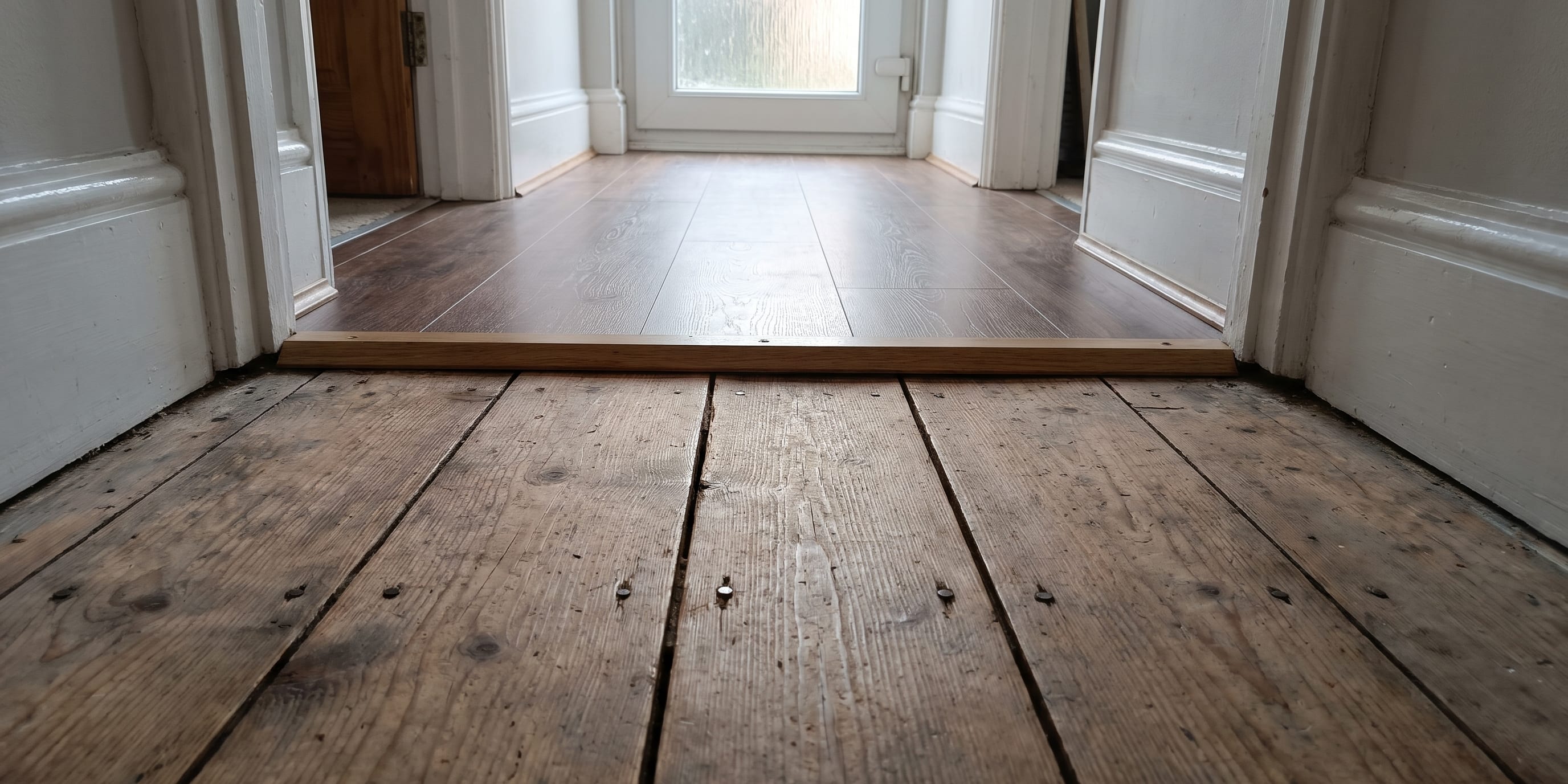
Most homes in this part of the world have timber floorboards upstairs, and plenty have them downstairs too. So when you start looking at a new carpet, a vinyl for the bathroom or laminate for the hallway, the question comes up almost immediately: can you put flooring over floorboards, or does something have to happen to them first?
The short answer is yes, in nearly every case the boards stay where they are and the new floor goes over the top. The longer answer, and the one that actually affects your quote, is that the condition of those boards decides how much work goes in underneath. Some floors forgive a bit of unevenness. Others really do not.
This guide is written for the stage you are probably at now: deciding what to order and wanting to know what you will be charged for. It is not a DIY prep guide. The preparation is part of the fitting job, and knowing how it gets assessed and priced puts you in a far better position when the quote lands.
What happens to your floorboards during a free measure
A measuring visit is not just someone running a tape across the room. The subfloor gets looked at, because the subfloor determines what can realistically be laid on top of it and how long it will stay looking right.
Here is the kind of thing a fitter is checking while they are in the room:
Movement. Boards get walked on. A board that flexes, drops or rocks underfoot is one that has lost a fixing or has pulled away from the joist. Under carpet that is a minor nuisance. Under a rigid floor it becomes a long term problem, because the flooring above moves with it.
Level and flatness. These are two different things, and it is the flatness that matters most. A whole floor can slope gently across a room without causing any trouble at all. What causes trouble is a sudden step where one board sits proud of its neighbour, or a dip in the middle of a run. Hard flooring bridges those changes rather than following them, which puts stress on the joints.
Gaps. Older boards shrink. Gaps between them let draughts up, and under a thinner carpet the lines can start to telegraph through so you can see the board pattern in the pile.
Board edges and condition. Cupped boards, raised nail heads, splintered edges, old tack strip holes and the remains of previous adhesive all get noted, because they all need dealing with before anything new goes down.
Damp and ventilation. Ground floor timber in particular gets a look. If there is any sign of moisture, that is flagged, because laying a new floor over a damp subfloor just hides a problem rather than solving it.
Doors, thresholds and heights. Adding an overlay raises the finished floor height. The fitter checks whether doors will still clear, and how the new floor will meet whatever is in the next room.
All of this happens at the same visit as the measuring, which is the whole reason the measure is done in person rather than from a rough plan you send over. More on how that visit works on the carpet fitting page.
How each flooring type copes with old boards
This is where the decision really gets made. The same floor can be perfectly fine under one product and a poor choice under another.
Carpet
Carpet is the most forgiving option by a wide margin. A good underlay sits between the carpet and the boards and absorbs a fair amount of minor unevenness, so sound floorboards in reasonable condition often need nothing more than loose boards securing and any proud nails punching down.
Carpet still has its limits. Very wide gaps will draught, and the board lines can eventually show through a low pile or a thin carpet. That is when a hardboard overlay gets suggested even for carpet, usually in rooms where the boards are noticeably gappy or where you have chosen something with a short, dense pile that shows everything underneath it.
Vinyl sheet
Vinyl is the opposite of carpet. It is thin, flexible and takes on the exact shape of whatever is beneath it. Lay sheet vinyl straight onto floorboards and within months you will be able to see every board joint, every gap and every nail head through the surface. In a bathroom or kitchen, where vinyl is most often used, there is also water to think about.
Vinyl essentially always wants a smooth overlay. Plywood or hardboard is laid first, then the vinyl goes onto that. It is not an upsell, it is how the product is designed to be installed.
Laminate
Laminate floats over the subfloor on a foam underlay rather than being fixed down, and the planks lock to each other. That makes it less fussy about small imperfections than vinyl, but very fussy about larger ones. Where the subfloor dips or steps, the locking joints are left spanning the gap, and over time they flex, click and can eventually separate.
Laminate over floorboards is common and works well, provided the boards are flat enough and firmly fixed. Where they are not, a plywood overlay is the usual fix. Running the planks at right angles to the boards helps as well, which is why a fitter may specify a direction rather than letting you choose.
LVT (luxury vinyl tile)
LVT is the least tolerant of all. Because the tiles or planks are thin and often glued down, they follow the subfloor almost perfectly, and the joints between tiles sit right where any board gap would be. The finish also tends to be smooth and often slightly reflective, which shows up irregularities that a textured floor would hide.
LVT over bare floorboards essentially always requires a plywood overlay, and often a levelling compound over that depending on the product. If you are drawn to LVT and you have original boards, budget for the subfloor work from the outset rather than being surprised by it.
When plywood or hardboard gets recommended
An overlay is a sheet material fixed down over the existing boards to create a flat, continuous, stable surface. Hardboard is thinner and is typically used under carpet where the aim is simply to close gaps and smooth the surface. Plywood is thicker and stiffer, and is used where real structural flatness is needed, which means under vinyl, laminate and LVT.
It will usually be recommended when:
- the boards have noticeable gaps between them
- individual boards sit at different heights
- the boards have cupped or warped with age
- you are having vinyl or LVT in any room
- you are having laminate over boards that are not reliably flat
- the existing surface has old adhesive, paint or damage that cannot simply be made good
On the quote, this appears as a separate line covering materials and the labour to fit them, priced on the area involved. Because the assessment happens at the measure, you see that figure before you commit, not after the old floor has come up. That matters. A quote that only prices the carpet and the fitting, with subfloor work raised on the day, is not a complete quote.
Signs you can spot yourself before the visit
You do not need to diagnose anything, but noticing these helps you ask the right questions and means nothing comes as a shock:
Squeaks and creaks. Walk the room slowly. Repeated squeaking in the same spot usually means a loose board or a worn fixing.
Springiness. A board that gives under your weight, or a spot where the floor feels slightly bouncy, is worth mentioning.
Visible gaps. Look along the run of the boards towards the light. If you can see daylight or clear lines between them, that is a gapping issue.
A rocking chair or rattling furniture. A dining chair that will not sit on all four legs, or a wardrobe that needs packing out, is telling you the floor is not flat there.
Lines showing through an existing floor. If your current carpet or vinyl already shows the board pattern, a new one will do the same unless the subfloor is dealt with.
Lifted corners. If a carpet corner is already loose, lift it and look. Old adhesive, paint, damage or a previous hardboard layer are all useful to know about.
Mention anything you have noticed when you book. It does not change the price, but it helps the fitter arrive expecting the right kind of job.
What is included and what is extra
A standard fitting quote covers taking up and disposing of the old floor covering, fitting new gripper rods where appropriate, laying the underlay, fitting and trimming the new flooring, and finishing the doorways with the right thresholds. Straightforward preparation such as punching down a few proud nails or securing an obviously loose board is simply part of doing the job properly.
Items that are priced separately include plywood or hardboard overlay (materials and labour), levelling compound where a floor needs more than boarding, and door trimming where the new floor height means a door no longer clears. Moving large or heavy furniture, and taking up a floor that has been glued down rather than gripper fitted, may also be quoted separately depending on the room.
None of these should appear as a surprise. The point of assessing the subfloor at the same visit as the measure is so the quote you receive is the quote you pay.
If you are weighing up a new carpet and want the subfloor looked at properly before anything is ordered, have a look at Boundary’s carpet range and fitting service and arrange a free measure. The boards get assessed, any preparation gets priced in, and you can make the decision with the full figure in front of you.
Questions
Frequently Asked Questions
Can you put flooring over floorboards without removing them?
In most cases yes. Floorboards usually stay in place and the new flooring goes over the top. What changes from job to job is how much preparation that subfloor needs first, which depends on how level, sound and gap free the boards are.
Do floorboards always need boarding over before new flooring?
No. Carpet with a good underlay is often laid straight onto sound floorboards. Hard flooring is less forgiving, and laminate, vinyl or LVT over older boards more often needs a plywood or hardboard overlay to create a flat, stable base.
Will I be told about overlay costs before the fitting day?
That is the point of the free measure. The fitter assesses the boards at the same visit as measuring, so any plywood or hardboard needed is priced into the quote you receive rather than raised once the job has started.
Why do my floorboards squeak, and does it matter for new flooring?
Squeaks usually mean a board is moving against a joist or a fixing has worked loose. It matters because movement under hard flooring can cause clicking, creaking or joints opening up over time, so loose boards are normally secured as part of the preparation.
Can gaps between floorboards cause problems under carpet?
They can. Wide gaps let draughts through, and over time the shape of the boards can start to show through thinner carpet. A hardboard or plywood overlay solves both, which is one of the reasons it gets recommended.