
Beds & Headboards Buying Guide
Beds With Tall Headboards: Getting Proportions Right
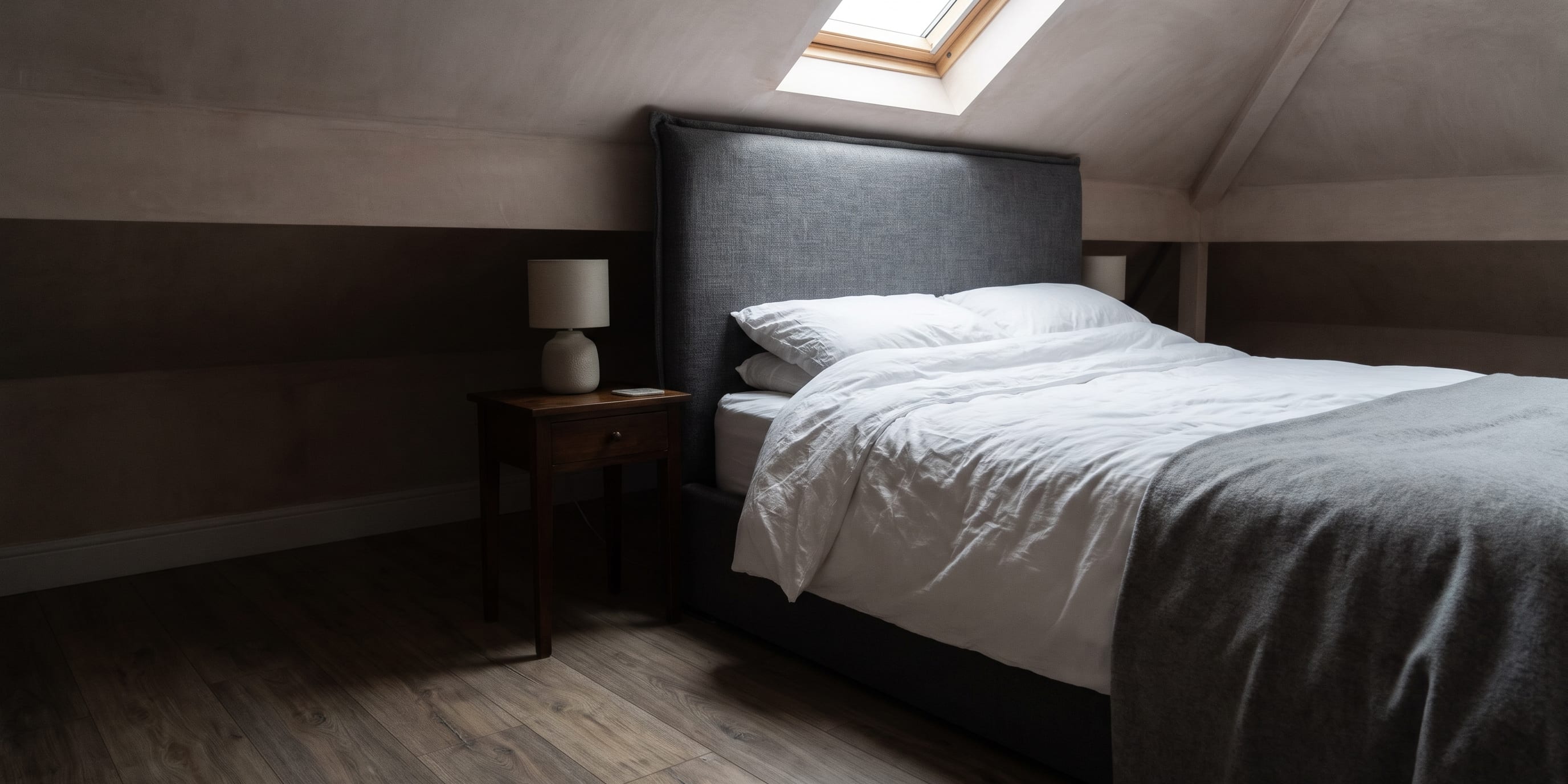
A tall headboard is one of the quickest ways to give a bedroom a sense of occasion. It anchors the bed, fills what is often the largest blank wall in the house, and makes sitting up to read genuinely comfortable rather than an exercise in propping cushions.
It is also one of the easiest things to get wrong. A headboard that looks generous in a showroom with a high ceiling can look overbearing in a 1930s box room, and one that measures beautifully on paper can turn out to clash with a window sill, a radiator or the lid of an ottoman base. Collection pages tend to sort tall headboards by colour and fabric, which is useful once you have decided, but it does not help you decide.
This guide works through the questions worth answering before you choose: what counts as tall, whether your room suits one, how the bed base changes things, what upkeep to expect, and the measuring that saves disappointment on delivery day.
What actually counts as a tall headboard
There is no industry standard. One retailer’s "tall" is another’s "standard".
As a rough guide, a conventional headboard on a double or king bed tends to finish somewhere around 100cm to 120cm from the floor. Anything above roughly 130cm is usually marketed as tall, high or extra height, and designs reaching 150cm and beyond are readily available. Winged and panelled styles often sit at the upper end because the extra height is part of the look.
The critical detail is where the measurement starts. Two numbers get quoted and they are not interchangeable:
- Floor to top of headboard. The number you want for planning against windows, sloping ceilings and picture rails.
- Headboard panel height only. The height of the board itself, excluding the struts or legs below it.
A 120cm panel on struts can easily finish above 140cm once it is bolted to a divan. If a listing gives only one figure and does not say which it is, ask before you order. Also note the mattress depth the height is based on, because a deep pocket sprung mattress with a topper will eat into the amount of headboard you actually see.
Does your room suit one?
Height alone is not the test. It is the relationship between the headboard, the ceiling and the rest of the wall.
Ceiling height. In a room with a ceiling around standard new-build height, a very tall headboard can crowd the space above the bed, leaving an awkward strip of wall. Period properties with taller ceilings carry the same headboard comfortably and often look underdressed without some height on the bed. A simple rule of thumb: if the gap between the top of the headboard and the ceiling ends up narrower than the headboard is deep, it will usually read as cramped.
Sloping ceilings and dormers. Loft conversions and older top-floor bedrooms frequently have the bed under the slope, which is exactly where a tall headboard cannot go. Measure the ceiling height at the wall itself, not in the middle of the room.
What else is on that wall. Window sills, radiators, wall lights, switches and sockets all sit at fixed heights. A tall headboard that covers a socket is not just inconvenient, it can be a problem for bedside lamps and phone chargers. Picture rails and coving are worth noting too: a headboard that stops just short of a picture rail usually looks deliberate, while one that overlaps it looks like a mistake.
Room proportions. Small rooms are not automatically ruled out. Height can help a compact room feel taller, and drawing the eye upward is a well-used trick. What small rooms struggle with is bulk. A slim, flat-fronted tall panel in a tone close to the wall colour sits quietly; a deeply buttoned, heavily padded winged design in a strong contrast colour will dominate.
How the bed base changes the equation
This is the part most often overlooked, and it is where a lot of returns come from.
Divan bases. Most divans take a strut headboard, bolted through fixing points on the base. The strut length sets how high the panel sits, so the same headboard gives a different finished height on a shallow divan than on a deep one with a thick mattress. If you are replacing a headboard on an existing divan, check the fixing centres match. If you are buying both together, the height quoted should already account for the base.
Ottoman bases. Lifting mechanisms need clearance. End-lifting ottomans raise the mattress up and towards the head of the bed, so a tall headboard sitting close behind can obstruct the open lid or get scuffed by the mattress each time you lift it. Side-lifting ottomans are generally more forgiving. Either way, confirm compatibility for the specific base rather than assuming, and think about whether the headboard needs to be floor-standing so it can be pulled clear.
Slatted and wooden frames. Many frames come with an integral headboard, which means the height is fixed and not something you can upgrade later. Where you want extra height with a slatted frame, a floor-standing headboard is the usual answer. These sit on the floor between the frame and the wall, held in place by the weight of the bed. They give you flexibility, but they do push the bed a few centimetres further into the room, which matters in a tight space.
Wall-mounted panels. Fixing to the wall removes the base from the equation entirely and gives complete freedom over height. It does mean drilling, and it means the bed must stay exactly where it is.
Fabric, cleaning and sunlight
A tall headboard presents a large surface, so fabric choices show more than they would on a smaller panel.
Pile fabrics such as velvet and chenille look rich and feel soft, but pile can shade and mark where it is pressed. On a tall board, the area your head and shoulders touch gets a different treatment from the area above it, and over time that can become visible. Brushing the pile in one direction after cleaning helps keep the finish even.
Flat weaves such as linen-look fabrics and boucle hide contact marks better but can show dust more readily across a large expanse.
Cleaning. Vacuum regularly with a soft upholstery brush, working across the whole panel rather than just the lower section. For spills, blot rather than rub, and avoid soaking the fabric, as moisture can wick into the padding and leave a ring. Hair products and skin oils build up at head height, so address that zone before a mark sets.
Sun fade. This is the one people regret. A rug can be turned and a cushion can be swapped, but a headboard stays exactly where it is for years. If the bed sits where strong sunlight falls across the head of the bed, strong and dark dyes will show fading first, often as a band or a shadow line. Lighter and more muted fabrics disguise gradual change far better, and curtains or blinds drawn during the brightest hours will slow it considerably.
Our headboard service page covers the fabric and style options in more detail if you want to compare finishes side by side.
Measuring, access and delivery
Tall headboards are large, rigid objects. Getting one into a bedroom is a separate problem from getting it to look right once it is there.
Measure and write down:
- Floor to ceiling at the head wall, plus floor to any sill, radiator, socket or picture rail on that wall.
- The width and height of every doorway on the route, including the front door.
- The narrowest point of the stairs, and the turning space on any half landing or at the top.
- Loft hatch dimensions if the bedroom is up a second flight.
A tall headboard must pivot through a stairwell turn, and the limiting factor is usually the diagonal space on the landing, not the doorway. Where that is tight, ask whether the headboard arrives in one piece or splits into sections, and whether the struts fit separately. Many strut headboards travel flat and are bolted on in the room, which solves most access problems. Floor-standing and wall-mounted panels tend to arrive as a single piece.
Allow for assembly space too. Bolting struts to a divan is far easier with the base pulled away from the wall, so clear a working area before delivery.
Matching the headboard to your flooring and bedroom scheme
The headboard is a large block of colour at eye level, so it has to work with the flooring as much as with the wall behind it. Carpet, wood and vinyl each throw a different tone back into the room, and that affects how a fabric reads.
With a patterned or textured carpet, a plain headboard gives the eye somewhere to rest. With plain flooring, a buttoned, panelled or fluted headboard adds the interest instead. Trying both at once rarely flatters either.
Tone matters more than exact matching. A warm oatmeal headboard above a cool grey carpet can look disconnected even though both are neutral, so bring a flooring sample and a fabric sample together under the bedroom’s own light before committing. Daylight and warm evening bulbs can pull colours in quite different directions.
One practical note on carpet: a floor-standing headboard resting on a deep pile with a thick underlay will settle slightly, which shaves a little off the finished height and can leave a small shadow gap at skirting level. It is minor, but if you are working to a tight clearance under a sill, allow for it.
Finally, think about scale rather than style labels. A tall headboard reads as formal and considered when the rest of the room has some visual weight to balance it, such as full-length curtains, a rug or a substantial chest of drawers. A very tall headboard above sparse, low furniture can look top-heavy.
If you want to see how different heights and fabrics sit against real carpet samples, it is worth comparing options in person before you commit. Take a look through Boundary’s bed range or bring your room measurements into the showroom and we will work through the proportions with you.
Questions
Frequently Asked Questions
How tall does a headboard need to be before it counts as tall?
There is no official standard, but headboards described as tall or high usually measure somewhere above about 130cm from the floor, against roughly 100cm to 120cm for a standard height. Always check whether the measurement given is from the floor or from the top of the base, because the two are very different numbers.
Can I fit a tall headboard to an ottoman bed?
Often yes, but it depends on the lifting mechanism. End-lifting ottomans raise the mattress towards the headboard, so you need to confirm the headboard will not foul the open lid. Side-lifting ottomans are usually less of an issue. Check the manufacturer’s guidance for the specific base.
Will a tall headboard make a small bedroom feel smaller?
Not necessarily. A tall headboard draws the eye upward, which can help a small room with reasonable ceiling height feel taller. The problem is bulk rather than height, so a slimmer, lighter panel in a tone close to the wall will usually sit better in a small room than a deep buttoned one.
Do upholstered headboards fade in sunlight?
Any dyed fabric can lose colour with prolonged direct sunlight, and strong or dark shades tend to show it first. A headboard cannot be rotated like a rug, so if your bed sits opposite or beside a south-facing window, consider a lighter or more muted fabric and use blinds or curtains during the brightest part of the day.
Does carpet thickness affect headboard height?
It can, with floor-standing headboards. A deep pile carpet or a thick underlay lets the feet settle slightly, which lowers the finished height a little and can leave a small gap at skirting level. It is rarely dramatic, but worth allowing for if you are working to a tight clearance under a window or sloping ceiling.